

Treadmill Wholesale Smart Sourcing Tips for Bulk Fitness Equipment Buyers
2026-09-15
Ordering 200 treadmills that arrive with mismatched consoles and flimsy decks isn’t just frustrating—it’s a margin killer. Yet too many bulk fitness buyers still rely on outdated spec sheets and vague supplier promises. Smart commercial treadmill sourcing demands a sharper eye: from motor duty cycles and running deck thickness to after-sales parts support that won’t leave your clients stranded. The following procurement moves separate profitable fitness ventures from costly inventory headaches—and reveal where Yingruis fits into a resilient supply strategy.
Look Beyond the Lowest Quote When Comparing Treadmill Suppliers
A rock-bottom price on a commercial treadmill almost always hides corners cut somewhere in the drive system or deck construction. That $1,800 unit might use a lightweight 2.0 HP peak motor that overheats after forty minutes of continuous use in a busy gym, while a $2,400 alternative runs a 3.0 HP continuous-duty motor rated for twelve hours a day. Cheaper suppliers often fit thin, single-ply running belts that stretch and slip, or MDF decks that warp under heavy footfall. Within six months you could be facing motor failures, belt replacements, and member complaints—costs that dwarf the initial savings. Ask any facility manager who has bought three bargain treadmills in two years: the lowest quote usually becomes the most expensive treadmill once downtime and repair labor enter the ledger.
Smart buyers compare total cost of ownership, not the sticker price. For example, a low quote might exclude freight, inside delivery, assembly, and removal of your old equipment—adding $300 to $500 per unit. The warranty terms matter just as much: one supplier offers a lifetime frame warranty and five years on parts, while another covers only one year on everything after the sale. Factor in projected electricity consumption too, since an underpowered motor running near its limit draws more amps and runs hotter, shortening electronic component life. If you operate a 24-hour gym, a treadmill that needs a new controller board every eighteen months at $200 each will erase any upfront discount by year three.
Beyond the hardware, evaluate the supplier's service network and parts inventory. A cheaper quote often comes from a distributor who drop-ships from a warehouse three states away and has no local technician. When a treadmill goes down, you wait two weeks for a part and pay $150 per hour for a third-party repair crew. Meanwhile, a slightly higher-priced supplier might keep critical components—belts, decks, motor brushes, console boards—in a regional hub and dispatch their own certified tech within 48 hours. Ask for references from gyms of similar size and ask how long they waited for the last repair. The real price of a treadmill is what you pay to keep it running every day, not what you wired to the seller on delivery day.
Ask for Factory Floor Photos Before You Commit to a Container
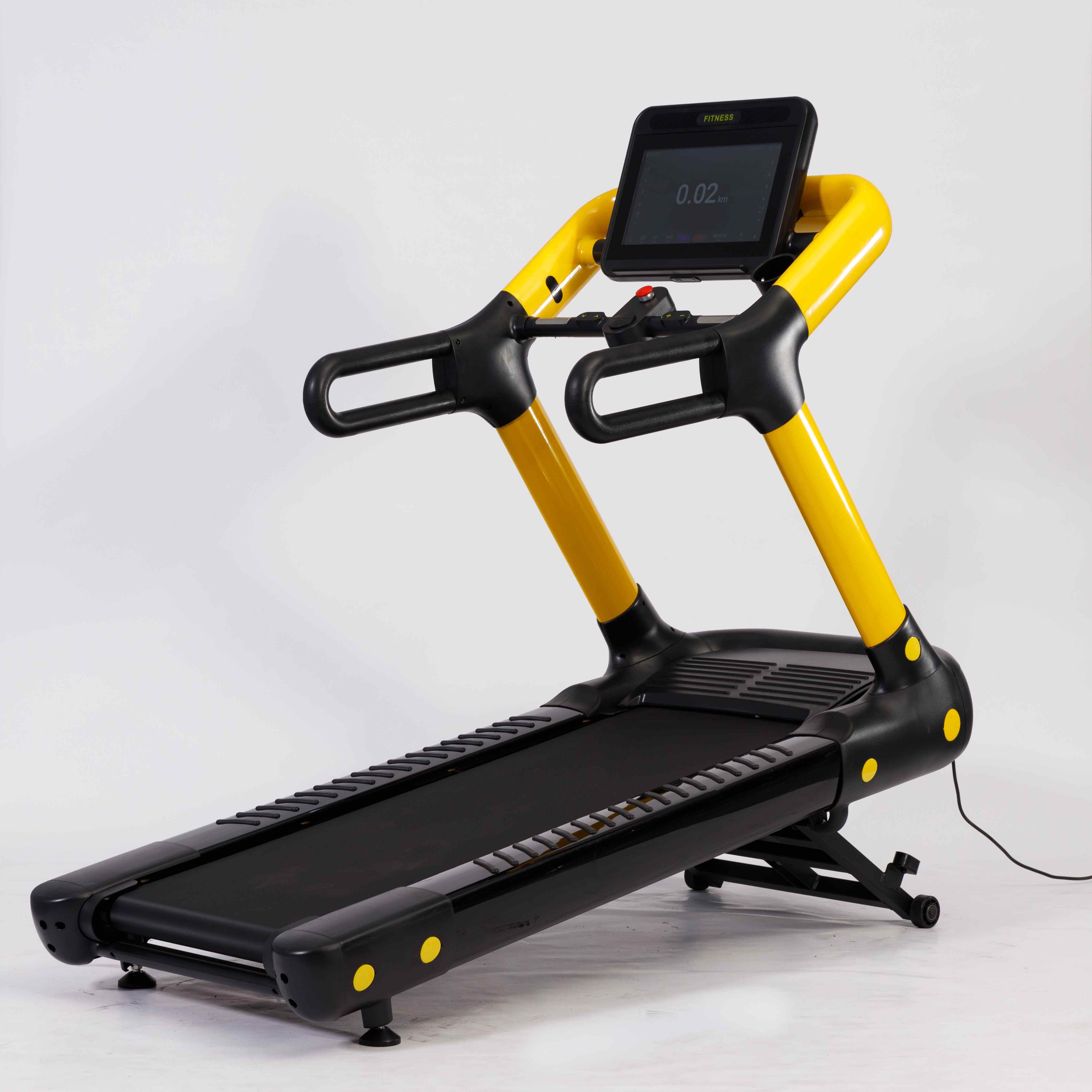
A polished product listing can hide a world of problems. The only way to know what you're really dealing with is to see where your goods are made. Ask for live, unedited photos from the factory floor — not the staged shots from a brochure. You want to see the production line, the storage area, and the people actually handling your order. If the supplier hesitates or sends you the same old images, treat that as a warning sign.
Photos taken on the spot tell you more than any audit report. Look for clutter, machinery that's clearly been running, and workers focused on their tasks. A clean but busy floor suggests organization. A dark, empty corner with boxes piled haphazardly might point to careless handling or a third-party broker who doesn't control the process. Compare the photos to what you know about the product's complexity — if you're ordering precision electronics but the floor looks like a textile workshop, something's off.
Don't just accept a single wide-angle shot. Request close-ups of the specific materials, the assembly step for your product, and even the packaging area. The goal is to confirm that the supplier actually has the capability and the current stock to fulfill your order without surprises. A supplier who is proud of their operation will send you a dozen photos within the hour. A supplier who stalls is already telling you everything you need to know.
Negotiate Multi-Year Warranty Terms Instead of Chasing Perks
When equipment suppliers dangle "free" training, extended software trials, or complimentary accessories, it's easy to get distracted. Those add-ons rarely move the needle on total cost of ownership. What actually saves money over time is locking in a multi-year warranty that covers parts, labor, and on-site response beyond the standard twelve months. Push for three to five years of coverage at a fixed rate—it turns unpredictable repair bills into a known line item and forces the vendor to stand behind their machine's reliability.
Vendors often resist long warranties because they expose weak points in their service network. Use that hesitation as leverage: if they won't extend coverage, ask why. A confident supplier will negotiate years two through four without blinking, especially if you're buying multiple units or committing to a maintenance contract. Get the warranty terms in writing before signing the purchase order—verbal promises about "we'll take care of you" disappear the moment a compressor fails on a Friday night.
Don't settle for a warranty that only covers catastrophic failures. Insist on language that includes wear parts, software updates, and preventive maintenance visits. A three-year bumper-to-bumper agreement on a production line is worth far more than a free tablet or a discount on your next order. When you compare bids, put a dollar value on the warranty length and coverage breadth—then watch the "perks" fade into irrelevance.
Lock in Freight Costs Early to Avoid Hidden Port Fees
Every importer learns this lesson eventually: the price you’re quoted for ocean freight rarely matches what you end up paying once the container hits the dock. Port fees, terminal handling charges, congestion surcharges, detention fees—they pile up fast. One way to stay ahead is to negotiate all-inclusive rates with your freight forwarder well before your cargo is booked. Get the port charges, documentation fees, and any likely surcharges locked into the contract. If a forwarder won’t commit to a fixed port fee schedule, that’s a red flag.
Timing matters more than you might think. Waiting until the last minute to book space often means accepting whatever surcharges the carrier throws at you, because your leverage disappears when the vessel is days from sailing. By securing rates 30 to 60 days out, you give yourself room to compare forwarders and push back on vague lines like “subject to terminal charges.” Ask for a sample fee breakdown from a previous shipment to the same port—real numbers, not estimates—so you know exactly what’s included.
Also watch for ports that have a habit of introducing new fees mid-season. If a certain terminal is known for sudden “security charges” or “infrastructure fees,” assume those will show up unless your contract specifically excludes them. A written agreement that caps total port-related costs per container, with any overage billed back to the forwarder, can change the entire dynamic. Freight rates rise and fall, but the hidden port fees are often more negotiable than they appear—if you lock them down early.
Test a Single Unit Before Scaling to Bulk Orders
Before committing to a large production run, it's wise to order one sample and put it through real-world use. This step reveals flaws that spec sheets never mention—loose stitching, uneven printing, or materials that feel cheaper than expected. A single unit lets you check durability, comfort, and whether the item matches your brand's standards without risking your entire budget on a batch that might disappoint.
Testing one piece also gives you a clearer picture of shipping times and packaging quality. You can see how the product arrives, whether it's protected properly, and how long the whole process actually takes from order to doorstep. These small details often get overlooked when you scale too fast, and they can quietly eat into your margins or damage your reputation.
Once the sample passes your inspection, you're in a much stronger position to negotiate bulk pricing. You'll know exactly what you're paying for, and you can push back on any drop in quality when the larger order arrives. Skipping this step might save a few days, but it often leads to costly surprises that are far harder to fix after a thousand units are already sitting in your warehouse.
Watch for Regional Voltage and Safety Certifications
Before you plug anything in, check the voltage range printed on the device or its power brick. A unit designed for 120V will fail quickly on a 220–240V circuit, and the reverse often means sluggish performance or a dead motor. Frequency matters too: appliances with clocks, timers, or AC motors can drift or overheat when 50Hz and 60Hz expectations don't match. If the label says something like 100–240V and 50/60Hz, you are safe with a simple plug adapter; otherwise plan for a step-up or step-down transformer sized to the wattage.
Safety marks are not decorative. A legitimate UL, ETL, CE, CCC, or PSE logo indicates the item passed specific tests for insulation, grounding, and fire resistance. Counterfeit goods often fake these marks, so verify the certification number on the issuer's public database when the purchase is high-risk—think heaters, chargers, or anything with a lithium battery. Regional rules differ in meaningful ways: a CE mark alone does not satisfy North American inspectors, and a CCC mark is essentially mandatory for products sold in mainland China. If you import equipment, your local authority may reject it without the expected mark, even if it works fine on paper.
For frequent travelers or anyone buying imported tools, the smart move is to choose devices with wide voltage input and genuine certification for your home country. Pay attention to the plug type as well; a universal adapter solves the physical connection but does nothing for voltage or safety. When in doubt, a qualified electrician can check the device and the destination standards in minutes, saving you from a costly fire or a denied insurance claim later.
FAQ
Look beyond the catalog. Request a video tour of production lines, ask for recent client references in your region, and confirm whether they have experience with container-sized orders. Check certification files and compare frame thickness, motor horsepower, and running belt material across at least three suppliers.
Ask for a detailed quote that separates unit cost, inland freight, port charges, customs clearance support, and any destination fees. Many buyers forget to clarify whether the price includes drop-shipping-ready packaging or brand removal. Get terms in writing on the proforma invoice, including who covers demurrage if paperwork is delayed.
Most mid-sized factories start around 10 to 20 units per model, while larger OEM lines may require 50 or more. If you are testing a new market, offer to pay a slightly higher per-unit rate for an initial mixed-container order. Many suppliers will reduce the MOQ if you accept standard colors and non-peak season production slots.
Focus on continuous duty motor rating rather than peak horsepower. A 3.0 HP continuous-duty motor is the practical minimum for gym use. Also check the running surface length—at least 150 cm for tall users—and the frame warranty. Cushioning systems that reduce joint impact often separate club-level machines from home-grade units.
Request a live production video call at a time you choose, not a pre-recorded clip. Ask them to show the specific model's frame welding and motor assembly area. Third-party inspection companies can handle a pre-shipment check for roughly a few hundred dollars. Also order one sample unit sent by air before committing to a full container.
Instead of pushing only the unit price, negotiate spare parts kits, extended motor warranties, and replacement console screens. Request free replacement belts for the first year as part of the contract. Suppliers with excess seasonal capacity may offer better terms for orders placed in late spring or early fall.
A factory gives you better control over custom changes and lower base pricing, but a reputable trading company can consolidate multiple equipment types and handle mixed shipments more smoothly. If your order spans several product categories, the trading company may save you time. For a treadmill-only order above 30 units, try to work directly with a manufacturer.
Be cautious if one quote is far below others without a clear explanation. Common tricks include using thinner steel frames, unbranded motors, or lower-density running decks that warp. Ask for the full spec sheet with model numbers of the motor and controller. If a supplier cannot provide those, move on.
Conclusion
A low per-unit price often hides the real cost of bulk treadmill sourcing. Buyers who have done this for a while push past the initial quote and ask for factory floor photos or a brief video tour before committing to a container, because wiring, frame welds, and assembly quality are hard to fake on camera. They also steer negotiations toward multi-year coverage on motors, decks, and electronics instead of chasing free mats or minor add-ons. Meanwhile, they lock in freight terms early—destination charges, customs brokerage, and port handling included—so a seemingly cheap deal does not balloon once the shipment arrives.
Before scaling to a large order, testing a single unit under daily use for a few weeks reveals belt tracking issues, console glitches, and noise problems that spec sheets miss. It is equally important to confirm that each treadmill carries the correct voltage, plug type, and safety certifications for your target region; otherwise, a full container can become dead stock. These habits—sample testing first, regional compliance checks, trading perks for warranty, and tight freight control—separate buyers who build reliable supply chains from those who spend their margin fixing preventable mistakes.
Contact Us
Contact Person: Owen Wu
Email: [email protected]
Tel/WhatsApp: 86-15376736259
Website: https://www.yingruisfit.com/