

Top Hotel Heating and Cooling Systems for Unmatched Guest Comfort
2026-10-13
No guest writes a review about the boiler—until the room is too cold to sleep. The best hotels understand that thermal comfort is invisible luxury: it's the reason a lobby feels calm in July or a suite warms up before you step out of the shower. Here, we look at the heating and cooling systems that deliver that quiet, constant ease, and why leading properties trust Tongbaote to engineer it without guests ever noticing.
VRF Systems That Keep Guest Rooms Quiet and Cozy
VRF systems operate with variable-speed compressors that avoid the jarring on/off cycles typical of older HVAC units. Rather than sudden blasts of air, they ramp output up and down almost imperceptibly. This keeps background noise in guest rooms to a low murmur, closer to a soft airflow than a mechanical rumble.
The indoor units can be placed away from sleeping areas or tucked behind discreet grilles, and many brands offer a quiet or night mode that drops fan speeds below 20 decibels. Because each room or zone is controlled separately, a guest can set their own temperature without affecting adjacent rooms, which reduces complaints and prevents overcooling or overheating.
Humidity control also plays a role: by removing excess moisture at lower fan speeds, VRF systems create a still, comfortable environment that doesn't feel drafty. The result is a room that stays consistently cozy without the constant hum, click, or rush of air that disrupts sleep.
Geothermal Loops: The Steady Comfort Most Hotels Overlook
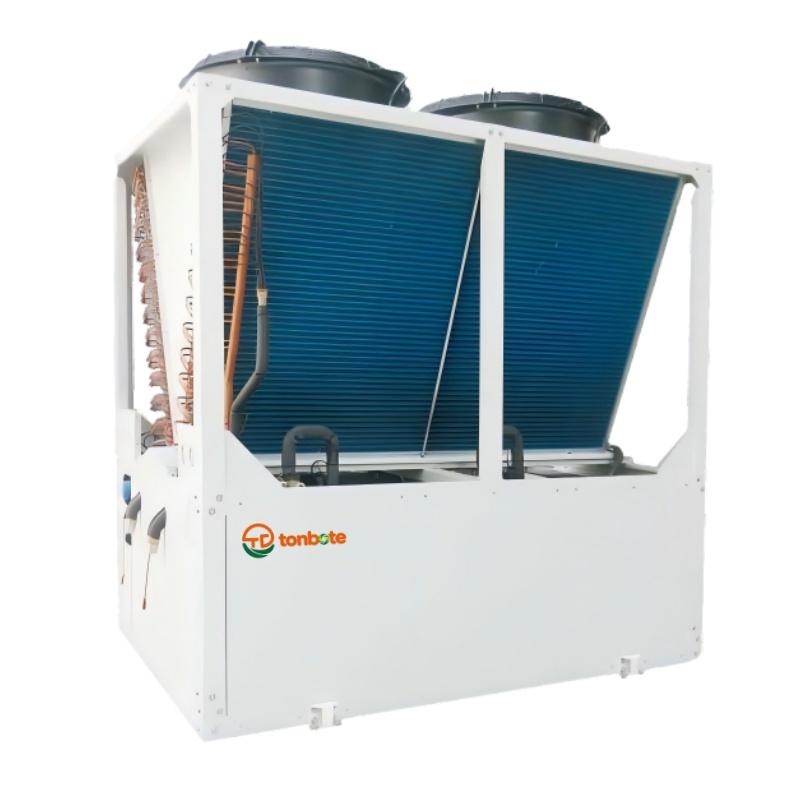
Most hotel engineers chase the obvious: chiller efficiency, air handler filters, occupancy sensors. Yet beneath the parking lot or landscaped courtyard, a quieter system often runs at half its potential. Geothermal loops don't need dramatic weather to prove their value. They trade slow, steady heat exchange for year-round consistency, cutting peak demand without a single moving part above ground.
The overlooked part isn't the technology—it's the operating rhythm. A ground-source loop works best when left alone to drift with soil temperature, not forced to mimic an air-source heat pump's rapid cycling. Hotels that reset loop temperatures too aggressively or stage pumps in short bursts lose the very stability that makes geothermal attractive. Instead, letting the loop run at a modest delta-T, even during low occupancy, keeps the ground field balanced and avoids thermal depletion over a decade of service.
What separates properties that actually save energy from those with a geothermal badge and nothing else is maintenance of the invisible: verifying glycol concentration, checking for air pockets, logging entering and leaving water temperatures seasonally. These sound dull, but they're the difference between a loop that delivers 40% cooling savings and one that quietly underperforms while the front office wonders why the power bill hasn't moved.
Zoned Mini-Splits Give Every Guest Their Own Thermostat
Instead of routing every room through one central thermostat, a zoned mini-split setup places a compact indoor unit in each guest room or suite. Each unit comes with its own remote or wall-mounted controller, so guests can set the temperature exactly where they want it without affecting adjacent spaces. That means no more hallway thermostat battles or late-night calls to adjust the heat.
The outdoor compressor modulates to match the combined load from all indoor units, so even if one guest wants a warm room while another prefers a cool one, the system delivers both at the same time. This kind of individual comfort is especially useful in vacation rentals, boutique hotels, or multi-generational homes where personal preferences vary widely.
Because each zone only runs when it is needed, the system avoids heating or cooling empty rooms. Guests appreciate having real control over their own climate, and property owners see lower utility bills without sacrificing comfort. It is a simple way to make every room feel like its own private retreat.
Heat Recovery Ventilation Delivers Fresh Air Without the Chill
Most ventilation systems force you to choose between stale indoor air and a cold draft. Heat recovery ventilation flips that trade-off entirely. It pulls in outdoor air while simultaneously exhausting indoor air, passing both streams through a heat exchanger. The outgoing warmth transfers to the incoming fresh air before it ever reaches your living space, so you get a steady supply of oxygen-rich air without a temperature drop.
The real magic happens in the core of the unit, where thin conductive plates separate the two airflows. In winter, the heat from the exhaust side pre-warms the supply air up to 80–90% of the indoor temperature. That means your heating system barely notices the exchange, and your energy bill stays flat while your home breathes properly. Even on frosty mornings, the air entering your bedroom feels neutral, not icy.
Unlike opening a window for five minutes, this system runs continuously and quietly in the background. It also filters incoming air, removing pollen, dust, and urban particulates before they circulate indoors. For allergy sufferers or anyone living near a busy road, that’s a quiet upgrade. You end up with the freshness of an open window and the comfort of a sealed, warm room—no compromise required.
Smart Thermostats That Learn When a Room Is Occupied
Most programmable thermostats expect you to tell them when you're home, which rarely matches real life. A smarter approach watches for subtle cues—motion near doorways, shifts in humidity, the small heat signature left behind after someone leaves a chair. Over a few days, it builds a loose map of which rooms actually get used at which times, rather than relying on a fixed schedule.
These devices don't need cameras or always-on microphones to do this. Low-power infrared sensors, door contacts, or even Bluetooth signal drift from a phone can be enough. The thermostat learns that the living room tends to empty out after 10 p.m., that the upstairs office is rarely occupied on weekends, and that the kitchen gets a burst of activity before 7 a.m. That means it can ease back on heating or cooling in empty spaces without making the whole house feel chilly.
Occupancy-based learning also handles exceptions better than a static timer. If you're home on a sick day or working late, the system notices the prolonged presence and holds the temperature instead of dropping it. Because the adjustments happen room by room, you're less likely to notice the system working at all—just a house that feels comfortable without wasting energy in unused corners.
Humidity Control That Banishes That Stuffy Hotel Feeling
Walking into a hotel room should feel like a reset, not a reminder of the hallway outside. But when humidity lingers around 65% or higher, the air turns thick, carpets hold a faint mustiness, and even fresh sheets seem to absorb that closed-up smell. The fix starts with pulling moisture out at the source rather than masking it with sprays. Compact dehumidifiers tucked into closets or built into the HVAC quietly drop relative humidity into the 40–50% band where fabrics feel crisp and breathing feels lighter.
The difference shows up in small ways. A properly dehumidified room stops holding onto yesterday’s shower steam, so mirrors clear faster and the bathroom stops steaming up the main sleeping area. Window condensation disappears, and that clammy sensation on your skin after a long flight fades within minutes of unpacking. It’s not about blasting cold air; it’s about keeping moisture balanced so the cooling system can do its job without fighting dampness.
Guests notice when the air moves but doesn’t feel heavy. Adding a low-profile exhaust or a smart vent that cycles on occupancy keeps the room from going stale between cleanings. The result is a space that smells like nothing—no perfume, no dampness—just the neutral backdrop that lets you forget you’re in a hotel at all.
FAQ
They lean on multi-zone VRF or chilled-beam systems paired with discreet wall and ceiling sensors. Instead of relying on one thermostat near the door, the system samples air from several points and adjusts dampers or refrigerant flow second by second. That prevents hot spots near windows and cold pockets by the bathroom, keeping the whole room within about half a degree of the set point.
The secret is low-velocity air delivery. High-end properties use displacement ventilation or fabric ducts that push conditioned air through thousands of tiny perforations at speeds below 50 feet per minute. You get cooling without the whoosh, and because the air enters at floor level and rises naturally, there are no cold blasts hitting your face while you sleep.
Heat-recovery ventilation, geothermal exchange, and occupancy-based setbacks do the heavy lifting. A modern hotel might run warm exhaust air past cold incoming fresh air to transfer 80% of the thermal energy, or tap into underground loops that stay around 55°F year-round. When a room is empty, the system trims output by a few degrees, then returns to the guest's preferred setting within minutes of check-in.
Absolutely—temperature and noise are the two biggest environmental sleep disruptors. Advanced systems maintain a 'sleep curve' that gradually lowers the room from 72°F to around 66°F during the night, then warms it again before wake-up. They also use near-silent fan coils and radiant ceiling panels that avoid the abrupt on-off cycling linked to night waking.
Each room is treated as an isolated thermal zone with its own damper, fan coil, or VRF branch. Digital pressure sensors continuously adjust airflow so that no suite pulls conditioned air from an adjacent space. That zoning also means a guest who likes it at 68°F won't force the couple next door to shiver at 74°F.
Humidity control and filtration are just as important as temperature. Premium systems keep relative humidity between 40% and 60% to deter mold, dust mites, and that stale hotel smell. MERV-13 or higher filters, bipolar ionization, and constant low-level ventilation scrub out allergens and odors, so guests wake up without congestion or dry eyes.
Yes—some properties install window-contact sensors that automatically pause the HVAC in that room when the sash is open. Others use demand-controlled ventilation to balance fresh air intake with conditioning load. In milder climates, a few hotels even rely on natural cross-ventilation with radiant floors for backup, giving guests real outdoor air without the energy bill spike.
Conclusion
Most travelers never notice the machinery behind a perfect night's sleep—they just know the room felt right. That quiet consistency often comes from variable refrigerant flow systems, which adjust output in small, nearly silent increments instead of blasting air in noisy cycles. In some properties, the real work happens underground, where geothermal loops tap steady earth temperatures to pre-condition water before it ever reaches a guest floor. It's a slower, less flashy approach, but it keeps energy bills predictable and corners free of drafts.
Guest comfort gets personal with zoned mini-splits. One room can hold at 68 degrees while the suite next door sits at 74, each controlled by its own thermostat. Heat recovery ventilation pairs with those units to bring in outside air without undoing all that careful heating or cooling—stale air goes out, fresh air arrives, and the room temperature barely flinches. Smart thermostats add another layer by reading occupancy patterns. When a guest steps out for dinner, the system eases back; when the key card slides into the slot at midnight, the room has already drifted to the preferred setting. Then there's humidity, the invisible factor. A well-tuned system strips excess moisture in summer and adds a bit in dry winter climates, so the air never has that heavy, recycled hotel feel. Together, these technologies don't draw attention to themselves. They simply make a room feel effortless—quiet, fresh, and exactly the temperature each guest expects.
Contact Us
Contact Person: Wanshu Chen
Email: [email protected]
Tel/WhatsApp: +86-13662871206
Website: https://www.mbcee.com