

Steel Casting Supplier Insights for Modern Manufacturing Success
2026-11-01
In an industry where a single casting flaw can stall an entire production line, choosing the right steel casting supplier is no longer a back-office decision—it’s a competitive lever. Supreme Machinery has spent years dissecting what separates reliable foundry partnerships from costly missteps. This post pulls back the curtain on supplier insights that modern manufacturers need, from metallurgical consistency to delivery discipline, so you can build a supply chain that actually holds up under pressure.
Why Cheap Casting Quotes Often Cost More in the Long Run
The allure of a rock-bottom casting quote is hard to resist, especially when budgets are tight. But what often gets buried in the fine print—or simply overlooked—is the true cost of cutting corners. Low bids rarely account for the hidden variables that plague metal casting: inconsistent material quality, looser tolerances, or a supplier cutting costs on inspection and post-processing. These shortcuts don't eliminate expenses; they simply push them downstream, where they resurface as rework, delayed timelines, or outright part failures.
Consider the ripple effect of a single bad casting. A cheap quote might save you a few dollars per unit upfront, but if those parts arrive with porosity or dimensional drift, you're now paying for sorting, machining adjustments, or a full recall. Worse, if the flaw slips through to your end customer, the damage isn't just financial—it's reputational. Many buyers end up paying twice: once for the cheap casting, and again for the expensive fix, not to mention the lost production hours spent firefighting instead of building.
Smart sourcing means looking beyond the invoice. A casting quote that feels "too good to be true" usually is—either it's a loss-leader to win the job with change orders to follow, or the foundry is skimping on things like melt certification, heat treatment, or dimensional validation. The real bargain comes from a supplier who prices for consistency, not just for the first article. When you factor in the total cost of ownership—yield, scrap, rework, and lead-time risk—the more expensive quote is often the cheaper one in the end.
The Material Data Your Foundry Should Track—and Why It Matters
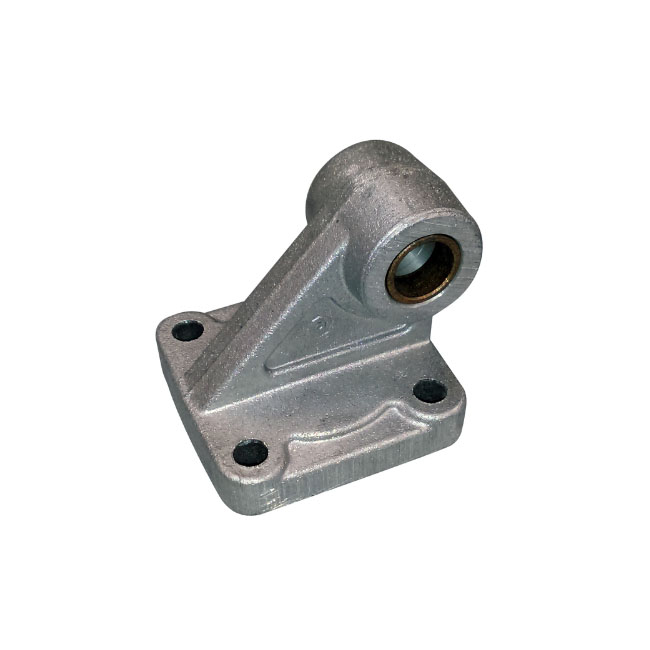
Tracking melt chemistry alone is not enough. A foundry that records pour temperature, solidification time, and heat treatment furnace profiles alongside the final tensile test results can trace a casting defect back to a specific ladle or shift within minutes instead of days. That level of traceability is what separates shops that ship consistent parts from those that flare up with customer complaints every quarter.
The most useful material data sets pair incoming raw material certificates with internal process readings. Recording the exact percentage of scrap in each charge, the inoculation practice, and the cooling curve shape gives you a baseline for mechanical properties before you ever cut a test bar. When hardness or elongation drifts out of spec, you can see whether it came from a supplier change, a furnace lining issue, or a pattern of afternoon pours running hot.
Beyond day-to-day quality, this data supports pricing and quoting. If you know the actual yield loss, rework rate, and scrap tonnage per alloy family, you can stop guessing on margins and start quoting with real cost data. It also makes audits smoother—customers increasingly ask for full material traceability, and having the numbers organized means you can answer those requests without a scramble.
From Pattern Design to Finish Machining: Where Quality Slips Happen
The gap between a clean pattern design and the final machined part rarely opens all at once. It starts small—a toolpath that looks perfect on screen, a surface finish spec that gets interpreted loosely, or a setup that shifts by half a thousandth under load. By the time the CMM report comes back out of tolerance, the root cause is often buried under layers of minor decisions made hours or days earlier.
One of the most common slip points is the handoff from CAD to CAM. Designers assume the machinist will know which features are critical, but without explicit callouts, the programmer may apply a uniform finish pass that works for most of the part and fails on a deep pocket or a thin wall. Thermal drift, tool deflection, and residual stress all act more aggressively on those areas, and the pattern’s original intent gets lost in translation.
Another recurring slip happens during finishing itself. The operator sees a chatter mark or a slight stepover mismatch and decides to “just blend it in” with a hand stone or a quick second pass. That manual touch might improve the visual appearance but can easily push a dimension out of spec or create a local stress riser. Without a clear feedback loop from finish machining back to the pattern design, each small compromise compounds, and quality slips become almost inevitable.
Building a Supplier Relationship That Can Handle Demand Spikes
Demand spikes rarely arrive with a polite warning. One week your supplier is coasting on routine orders, the next you're asking for triple the volume and praying they don't choke. The difference between a relationship that bends and one that breaks usually comes down to what you did before the surge hit.
Start by sharing your own demand forecasts, even the messy ones. A supplier who sees your projected peaks and valleys can plan capacity, lock in raw materials early, or reserve a line for you without being asked. Don't treat that information as a secret to guard; treat it as the currency of trust. In return, ask what constraints they'd face if orders jumped 40% tomorrow and listen to the answer instead of arguing with it.
When the spike actually arrives, resist the urge to become a frantic order machine. A quick call to the production manager, a thank-you note to the shift lead, or an agreement to accept partial shipments in phases can buy you priority that no contract clause ever will. Suppliers remember who treated them like partners during the hard weeks, not just who paid on time.
How Regional Regulations Shape Your Casting Supplier's Options
A foundry in the U.S. Midwest may run a completely different set of melting and finishing practices than a counterpart in Gujarat, even when both produce the same nominal alloy. Local air-quality rules, waste-disposal limits, and workplace exposure thresholds determine which sand binders are practical, whether a cupola or induction furnace is viable, and how much post-cast grinding can be done on-site. Those constraints quietly narrow the menu of feasible parts, tolerances, and surface finishes a buyer can expect from a given region.
Material standards add another layer. A supplier operating under EU REACH or Germany's tightened VOC directives might drop certain coatings, resins, or leaded alloys that remain common elsewhere. That forces redesigns toward alternative chemistries, different gating systems, or secondary treatments, all of which ripple into pricing and lead times. Buyers who assume a global casting quote is interchangeable often discover too late that a compliant supplier in one region simply cannot run the same process as a lower-cost rival across a border.
Even logistics regulations matter. Restrictions on transporting certain raw materials or finished castings across state or national lines can dictate whether a foundry sources scrap locally, imports specialty inoculants, or relies on regional heat-treating partners. A regulation that seems minor on paper, such as a mandatory emissions test every 90 days, can push a supplier to batch smaller runs less frequently, altering minimum order quantities and delivery reliability. Mapping these rules before locking in a casting source prevents surprises that raw per-piece price comparisons never reveal.
Evaluating New Steel Alloys for Weight, Cost, and Durability
When a design team starts swapping in candidate alloys, the first number they often reach for is density. But mass savings rarely scale in a straight line with that figure. Strength-to-weight ratios, forming allowances, and the extra mass from joints or reinforcements can erase much of the upfront advantage. A lighter alloy that needs thicker sections or more fasteners may end up heavier once everything is assembled.
Cost comparisons get slippery if only the per-kilogram price is considered. Scrap value, tooling wear, scrap rate, and whether the alloy can run on existing heat-treatment lines all pull the real cost in different directions. Some alloys look cheap on the mill certificate yet force slower feeds, shorter tool life, or additional inspection steps that dominate the final part cost.
Durability testing is where surprising gaps show up. Accelerated corrosion and fatigue rigs can rank alloys one way in the lab, while field data from similar operating environments tells a different story. Paying attention to failure modes—pitting versus general thinning, crack growth under mixed loading—is more useful than a single pass/fail salt-spray number. The best choice usually balances a modest weight gain against a meaningful jump in service life.
FAQ
A dependable supplier demonstrates consistent metallurgical control, transparent process documentation, and a track record of on-time delivery for similar component geometries. They also invest in non-destructive testing and maintain open communication during design revisions.
Material grades such as low-alloy steels or austenitic stainless steels affect tensile strength, corrosion resistance, and weldability. Selecting the wrong grade can lead to premature fatigue or brittle fracture under cyclic loads, so matching the alloy to operating temperature and stress is critical.
Solidification and flow simulation helps identify shrinkage porosity, hot spots, and turbulent filling before tooling is cut. This reduces trial pours, shortens lead times, and allows engineers to adjust riser placement or gating for higher yield.
Heat treatment normalizes grain structure, relieves internal stresses, and achieves specified hardness or toughness. In-house furnaces with precise temperature controls ensure consistent mechanical properties, whereas outsourced treatment can introduce variability and logistics delays.
Suppliers can offer just-in-time delivery of rough or semi-finished castings, provide batch-level quality data for traceability, and collaborate on near-net-shape designs that reduce machining stock and scrap.
Hidden costs include lengthy freight, import duties, rework from inconsistent dimensions, communication delays during engineering changes, and the expense of auditing distant facilities. These often outweigh the initial price advantage.
A rough or inconsistent surface can trap contaminants, cause uneven coating adhesion, or require extra machining passes. Controlled shot blasting and proper riser contact design improve surface quality and reduce total production time.
Beyond basic ISO 9001, relevant certifications may include material-specific testing standards, pressure equipment directives, or industry-specific audits. More important than certificates alone is evidence of a living quality culture through process control charts and corrective action records.
Conclusion
Many manufacturers learn the hard way that the lowest steel casting quote rarely delivers the lowest total cost. A supplier who cuts corners on melt practice, heat treatment, or nondestructive testing may send you parts that pass initial inspection but fail early in service, leading to rework, downtime, and warranty claims. Instead of chasing cheap bids, ask your foundry for full material data: chemical composition, mechanical test results, and heat treat records for each batch. Without that traceability, you cannot verify that a casting meets your specification. Quality also slips at predictable points, especially between pattern design and finish machining. Tooling that is not maintained or gating systems that ignore solidification patterns create internal porosity that only shows up after machining. A supplier that controls these transitions with documented process checks will save you more money than any upfront discount.
Beyond the part itself, a reliable steel casting supplier must be able to handle sudden demand spikes without sacrificing lead time or quality. That means you need more than a transactional purchase order; you need a relationship where the foundry understands your production schedule and holds capacity or raw material for your most critical parts. Regional regulations also shape what your supplier can do. Environmental rules on foundry emissions, worker safety standards, and local energy costs influence which alloys and processes are actually viable, so a quote that looks attractive on paper may not be sustainable under the supplier's operating constraints. When you evaluate new steel alloys for weight reduction, cost, or durability, make sure your supplier can provide comparative data from real casting trials, not just mill certificates. An alloy that welds or machines poorly will wipe out any theoretical savings. Modern manufacturing success depends on choosing a casting partner who treats material data, process control, and regulatory reality as part of the same conversation.
Contact Us
Contact Person: Paul
Email: [email protected]
Tel/WhatsApp: 8615067447509
Website: https://www.spironcasting.com