

Power Conversion System (PCS) Technology Providers: Key Players Shaping Energy Storage Innovation
2026-10-23
The race to build smarter, safer, and more efficient energy storage systems is no longer just about batteries. Power Conversion Systems (PCS) have quietly become the critical link that determines how much energy actually reaches the grid—and how reliably. Behind this shift, a handful of technology providers are pushing the envelope, and companies like UNC are proving that the next wave of innovation won't come from incremental tweaks, but from rethinking power conversion from the ground up.
The Power Electronics Architects Behind Modern Energy Storage
Modern energy storage systems owe much of their capability to a layer of engineering that rarely makes headlines: power electronics. These are the circuits and controllers that shuttle energy between battery cells, DC buses, and the AC grid with split-second precision. Without them, raw cell voltage would be unusable for most applications, and the round-trip efficiency of a storage plant would collapse. The designers working in this space act as architects, shaping how thousands of individual cells behave as one coherent, grid-responsive asset.
Their work spans silicon carbide and gallium nitride switches, advanced thermal management, and control algorithms that must react to grid frequency dips faster than a generator ever could. A well-designed power conversion system does more than convert DC to AC; it extracts maximum usable capacity, extends battery life by avoiding harmful charge profiles, and enables bidirectional power flow that turns a passive battery bank into an active participant in energy markets.
The architects who tackle these challenges come from backgrounds in analog circuit design, digital signal processing, and high-voltage safety. They juggle constraints like electromagnetic compliance, cooling under full load, and fault ride-through requirements. Their decisions determine whether a storage project can handle a sudden cloud passing over a solar farm or a frequency excursion on a weak grid, making them the unseen critical path between a promising battery chemistry and a reliable, bankable energy asset.
Inside the Competitive Push for Higher Power Density
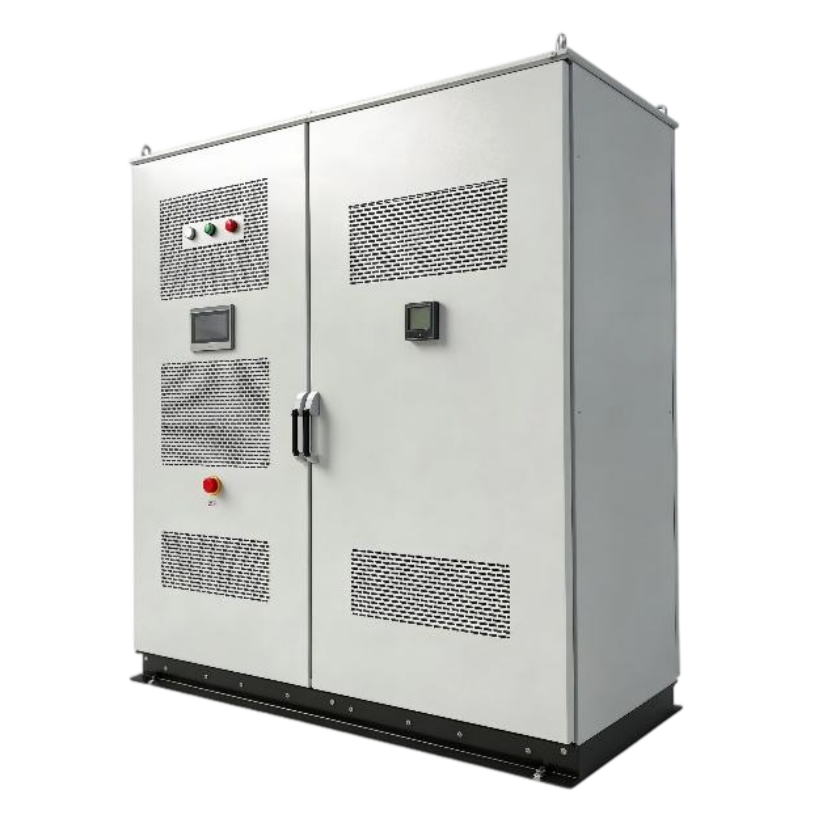
The race for higher power density is no longer a sideline concern. It now shapes how vendors position everything from server power shelves to onboard chargers. Every extra watt squeezed into the same footprint cuts cooling overhead or frees space for other hardware, so design teams keep pushing layouts and materials past what standard silicon processes were built to handle.
Wide-bandgap devices have changed the arithmetic. GaN and SiC switches tolerate higher frequencies and temperatures, which lets magnetics and capacitors shrink dramatically. But those gains don't come free. High-frequency switching concentrates losses in smaller areas, and EMI becomes harder to tame when everything sits closer together. The winning designs often hinge on how well the thermal path is managed, not just which semiconductor is chosen.
Packaging and integration are where much of the real differentiation now happens. Embedded magnetics, double-sided cooling, and 3D stacking allow manufacturers to claim a few extra percentage points of power density over rivals using similar silicon. That pressure ripples through the whole supply chain, pushing new substrate materials, better thermal interface compounds, and tighter tolerance assembly methods into the mainstream faster than many expected.
Silicon Carbide's Quiet Takeover of PCS Designs
For years, silicon IGBT modules were the default choice in power conversion systems, but silicon carbide has been replacing them in a surprisingly understated way. Designers first adopted SiC diodes to quiet reverse recovery, then moved to SiC MOSFETs as prices dropped and packaging matured. The result is a new generation of PCS designs that run at switching frequencies two to five times higher while shedding weight and volume from inductors, transformers, and heatsinks.
The shift carries real engineering trade-offs. Faster edge rates demand tighter gate drive loops, snubber networks, and revised EMI filtering to prevent ringing and parasitic turn-on. Yet the efficiency improvement, often one to two percentage points at the system level, is too valuable to ignore in solar, storage, and EV charging applications. Bidirectional converters for battery energy storage now specify SiC half-bridge modules almost as standard practice, not as a premium option.
Reliability concerns that once slowed adoption have largely faded as second- and third-generation devices accumulate field hours. Remaining barriers are mostly commercial: higher upfront cost per ampere and lingering questions about long-term gate oxide stability under extreme mission profiles. Even so, the transition is happening quietly, one design cycle at a time, as teams learn to manage SiC's speed and stop treating silicon as the safe default.
Grid Interaction Skills Now Define Top PCS Suppliers
Basic dc-to-ac conversion has become a commodity, so the real sorting happens when the grid misbehaves. A supplier's ability to inject reactive current within a few milliseconds, keep power electronics stable on a weak feeder, and shift seamlessly between grid-following and grid-forming operation is now the differentiator. Some PCS platforms can black-start an islanded microgrid or hold voltage and frequency steady without an external reference, which directly shapes whether a storage plant earns its interconnection agreement.
This capability also shows up in how deeply a vendor supports utility-specific settings. Instead of offering only preset ride-through curves, the stronger suppliers let operators tune undervoltage and overvoltage timing, adjust ramp rates, and capture high-resolution event logs for post-fault analysis. Developers routinely test these behaviors during factory and site acceptance, because a unit that looks efficient on a datasheet but trips during a distant fault will be replaced quickly.
Why System Integrators Lean on Select PCS Partners
For integrators juggling custom control architectures, off-the-shelf PCS solutions rarely fit without serious rework. The partners they keep close are the ones who treat hardware as a starting point, not the finish line — offering firmware tweaks, nonstandard I/O mapping, and communication stacks that match the plant’s existing quirks. That kind of flexibility only comes from a vendor who has seen enough real-world panels to know which deviations actually matter.
Technical fit is table stakes. What separates a go-to PCS partner is how they behave when a commissioning deadline slips or a legacy protocol refuses to cooperate. Top integrators lean on partners whose engineers pick up the phone, dig into logs, and ship a patched configuration overnight. That level of support transforms a supplier into an extension of the integrator’s own team — and it’s the main reason those relationships outlast individual projects.
Money talks, but so does accumulated trust. Every new PCS vendor means re-learning quirks, re-testing integrations, and re-explaining site constraints. The integrators who consistently deliver on time and under budget aren’t shopping around each quarter; they’ve already identified the two or three PCS partners who understand their typical scope, share their aversion to surprises, and can scale from a single skid to a multi-site rollout without breaking stride.
Thermal Management as the Unsung Hero of PCS Reliability
In grid-scale energy storage, conversations about power conversion systems tend to revolve around efficiency curves, switching losses, or harmonic distortion. Rarely does anyone bring up how the cabinet stays cool enough to keep functioning decade after decade. Yet it is precisely that quiet, unglamorous work of moving heat away from IGBT modules and busbars that determines whether a PCS will limp through its warranty period or outlast the battery racks it serves. A well-executed thermal design doesn't announce itself — it simply prevents the slow degradation that eventually shows up as nuisance trips, reduced output, and unplanned downtime.
The challenge is not just about peak temperature but about consistency. Hot spots around a single power module can accelerate solder fatigue and bond wire lift-off, while large gradients across the enclosure invite condensation and corrosion. Liquid cooling loops, carefully routed airflow, and phase-change materials all offer different trade-offs between complexity and thermal uniformity. The real trick lies in understanding the duty cycle of the PCS itself: a unit that ramps hard every evening for four hours faces a very different stress landscape than one that sees shallow, intermittent cycling. Mapping those transient loads onto the thermal time constants of heatsinks, capacitors, and magnetics is where reliability is won or lost.
Maintenance teams rarely think about thermal management until a temperature sensor exceeds a threshold or a fan bearing starts to whine. By then, the damage is often already accumulating. Dust filters that never get replaced, coolant that slowly loses its inhibitors, thermal interface material that dries out — each failure mode is subtle and slow. Including thermal health indicators in the PCS telemetry, from per-module temperature deltas to fan speed trends, turns an invisible aging process into something operators can actually manage. In the end, the heroics are not in exotic cooling technology but in respecting the fact that every percentage point of temperature rise above design conditions is quietly shortening the life of the system.
FAQ
It's the interface between the DC battery bank and the AC grid or load. A PCS handles bidirectional power flow—charging from AC to DC and discharging from DC to AC—while also managing reactive power, voltage, and frequency. Without a properly sized PCS, the stored energy can't be used reliably.
A mix of power electronics veterans and renewable energy specialists. Names like Dynapower, Nidec, Power Electronics, and SMA have deep inverter expertise. Tesla and Fluence also deliver integrated storage solutions with proprietary PCS technology. Sungrow and Ingeteam are strong in utility-scale projects, and ABB or Schneider Electric often appear in industrial and grid applications.
Several trends stand out. Higher DC voltages—1,500 V and beyond—reduce wiring losses and costs. Silicon carbide and gallium nitride semiconductors improve switching efficiency. Grid-forming inverter capabilities let storage plants stabilize weak grids without relying on synchronous generators. Also, modular designs allow easier scaling and hot swapping in multi-megawatt systems.
Grid-following inverters synchronize to an existing grid and shut down if the grid reference disappears. Grid-forming PCS units actively set voltage and frequency, so they can operate in islanded mode or black-start a portion of the grid. That makes them valuable for microgrids, remote communities, and regions with high renewable penetration.
Look beyond the datasheet efficiency number. Check the provider's track record with your battery chemistry and project size. Consider whether the PCS has integrated cooling, protection, and communication protocols that match your EMS. After-sales support, firmware update frequency, and local service availability often matter more than a one-point efficiency gain.
Yes, heat management and system complexity grow quickly. Multi-megawatt PCS containers need robust liquid cooling and careful thermal design to avoid derating. Cybersecurity for grid-connected converters is another rising concern. Supply chain constraints for power semiconductors and high-voltage components also force providers to rethink inventory and design flexibility.
For frequency regulation and short-duration services, they emphasize fast response and high cycle durability. For long-duration storage or solar-plus-storage, they focus on round-trip efficiency and low idle losses. For industrial microgrids, they might offer built-in black start, seamless islanding, and harmonic filtering. So the same company often has multiple product lines tuned to specific duty cycles.
Conclusion
The companies building power conversion systems for battery storage have moved far beyond simple DC-AC inversion. They now act as the architectural core of a project, orchestrating how energy flows between cells, inverters, and the grid under constantly shifting conditions. The race for higher power density is reshaping product lines, with every kilowatt per cubic meter becoming a hard commercial differentiator. This push has quietly driven silicon carbide semiconductors into mainstream PCS designs, replacing traditional silicon IGBTs in many high-frequency stages. The result is less switching loss, smaller magnetics, and cabinets that pack more throughput into the same footprint. Top-tier providers are no longer just component vendors; they are co-designers of the entire storage system's electrical behavior.
Grid interaction has become the sharpest filter for separating established PCS suppliers from newcomers. Utilities and developers demand native grid-forming capability, fast fault ride-through, and precise reactive power control that older inverter architectures cannot easily retrofit. That is why large system integrators tend to stick with a handful of trusted PCS partners across multiple projects, even when cheaper alternatives appear. Beneath all this sits thermal management, an often overlooked factor that determines field failure rates. Providers who master liquid cooling, advanced heat spreading, and derating algorithms earn long-term contracts by proving their hardware survives repeated thermal cycling in harsh environments. Ultimately, the key players shaping energy storage innovation are those who combine power electronics depth, silicon carbide expertise, grid code fluency, and thermal discipline into a single dependable platform.
Contact Us
Contact Person: Manager Leng
Email: [email protected]
Tel/WhatsApp: 8613764878967
Website: https://www.unc-energy.com