

Inside the Office Chair Factory: Where Comfort Meets Craftsmanship
2026-09-26
Step inside a place where foam is shaped, frames are welded, and every seam tells a story. At the OFCJNS factory, comfort isn't an afterthought—it's engineered from the first sketch to the final stitch. What really goes into an office chair that supports you through eight-hour days? We pulled back the curtain to find out.
Sourcing Materials That Outlast Trends
The hunt begins not in showrooms, but in forgotten warehouses and mills where fibers are judged by how they age rather than how they photograph. A woven wool with a tight, almost defiant twist might dull under studio lights, yet after five winters of wear, it still holds its shape while trendier knits have pilled into obscurity. The goal is to find materials that do not beg for attention on a rack but reveal their worth slowly, like a leather that darkens at the edges instead of cracking.
This demands a stubborn rejection of seasonal palettes. We seek out undyed linens the color of oat husks, vegetable-tanned hides that smell of oak and time, and horn buttons cut from water buffalo that will outlive the garment itself. Fabrics are tested not for immediate softness but for recovery—how they bounce back after being crushed in a fist—and for the quiet dignity they gain with each wash. If a material needs a label to explain why it is special, it fails the test.
In the end, sourcing is about trusting the physical world over the digital one. It means walking into a mill that has run the same looms for three generations and asking what they weave for their own families. Because trends are just loud echoes, but a material that outlasts them is a conversation between your hands and the maker who chose it long before you ever saw it hanging on a rail.
Designing Around the Human Spine
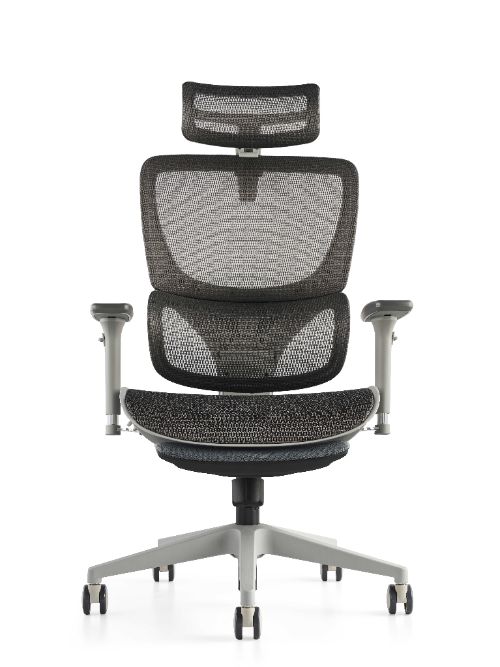
Most chairs treat the spine as a rigid pole that needs propping up. Spend an hour in one and you feel the pressure points where the design fought against your body's natural curves. Designing around the human spine means accepting that the back is not a flat surface, and that support shouldn't be symmetrical from top to bottom. The lumbar region wants gentle forward push, the thoracic area needs room to expand with each breath, and the cervical spine craves freedom to move rather than being pinned into a single position. When these distinctions get ignored, even expensive ergonomic chairs end up creating stiffness in the exact places they claim to protect.
A better approach starts with mapping how the spine actually behaves throughout a day. It flexes when you lean forward to type, extends when you recline to think, and twists when you reach for a file. No single static shape can accommodate all of that. Instead of sculpting a backrest to one idealized posture, the design should offer varying zones of resistance, letting the thoracic area yield while the lumbar support stays more assertive. The material choices matter just as much as the geometry: a mesh that breathes and gives way beats a hard plastic shell that forces your vertebrae into submission.
What often gets missed is how the pelvis anchors everything. If the seat pan tilts too far back, the pelvis rotates and flattens the lumbar curve no matter how fancy the backrest is. If it tilts too far forward, the lower back muscles work overtime just to keep you upright. The real craft lies in designing that seat-to-back relationship so the spine can find its own neutral alignment without being locked there. Small adjustments in seat depth and angle can shift the entire conversation from "holding you up" to "letting you settle." That's the difference between a chair you tolerate and one that makes you forget you're sitting at all.
Hand-Built Details Machines Can't Match
The slight unevenness of a hand-stitched leather seam, the way grain follows a curve no CNC can see, the faint witness of a chisel left on a drawer front—these are not defects. Hand-built details carry evidence of a person's breath, a pause, a decision made in the moment. Machines repeat; hands remember.
There's a kind of patience in shaping a panel by feel, listening to the metal as it stretches under a planishing hammer. No two pieces are identical, but each one fits because a craftsman adjusted, trimmed, and fit it to its neighbor. That sort of attention can't be automated away.
These imperfections aren't flaws—they're fingerprints. The subtle variation in a polish, the faint signature of sanding direction, the tiny radius where a chisel stopped. You can't spec that on a drawing, but you know it when you run your hand across it.
Stress Tests and the Art of Not Breaking
Most teams treat stress tests like a final exam: pass or fail, with the system either surviving or collapsing under artificial load. That mindset misses the point. A well-designed stress test isn't about proving the system won't break; it's about mapping exactly where and how it bends before anything snaps. The difference seems subtle, but it changes what you measure. Instead of watching for a binary crash, you track latency drift, queue buildup, retry storms, and the slow degradation of error budgets. Those early warnings are the real deliverables.
There is also a discipline in not over-correcting. When a component wobbles under pressure, the instinct is to reinforce it immediately. Often the better move is to leave the weakness visible for a while, so the next test can tell you whether the recovery path works without manual heroics. Teams that build 'not breaking' as a skill learn to run smaller, weirder experiments: killing a read replica during peak traffic, throttling a payment provider to 10% capacity, or suddenly revoking a service account's permissions. These don't simulate disasters; they rehearse composure.
The art lies in the debrief. A stress test that ends with a green dashboard teaches you almost nothing. A stress test that ends with a list of ugly, half-recovered states and a few surprised engineers is worth repeating. The goal isn't a system that never fails—that's a fantasy. The goal is a system that fails in ways you've already met.
Adjustments That Fit More Than One Size
A garment with real range doesn’t rely on stretch alone. Look for seams that can be let out without distorting the shape, cuffs that roll and stay, or button tabs that shift the drape from relaxed to tailored. These are quiet adjustments — no extra bulk, just a smarter cut.
Bodies change by season, by posture, even by hour. A waist that sits comfortably after lunch or a hem that works with both flats and low heels extends a piece’s life far beyond the first fitting.
The best multi-size pieces hide their flexibility. Elastic is encased rather than exposed, drawcords are slim and internal, and the silhouette still looks intentional at every setting. That kind of design takes more pattern work, but it shows up in how often you actually reach for the item.
Leftover Foam and a Cleaner Factory Floor
Most factory floors end up coated in a fine mix of dust, oil, and tiny metal shavings by mid-shift. Instead of reaching for another disposable mop head, some crews keep a bin of trimmed polyurethane foam scraps near the loading dock. The open-cell structure grabs debris without scratching the concrete, and a quick rinse in a solvent tank restores enough grip for another pass.
One maintenance lead started cutting leftover packaging foam into hand-sized blocks after noticing how well a stray piece picked up spills around a CNC station. Now each shift grabs a few cubes from a wire basket, and the walkways stay noticeably drier. The foam costs nothing, takes seconds to replace, and reduces the amount of rented rag bundles needed each month.
The real difference shows near the coating lines. Liquid overspray that used to harden into slick patches gets wiped while it is still tacky, preventing the usual end-of-week scraping job. Because the foam holds onto particles instead of pushing them around, the floor looks less hazy under the overhead lights, and slip-test readings have stayed in the safe range without extra chemical treatments.
FAQ
A lot more than assembly lines. Workers cut and shape foam layers by hand, stretch mesh over frames with calibrated tension, and run each chair through a series of tilt and swivel tests. There is also a surprising amount of quiet inspection work, checking seam alignment and bolt torque before anything gets boxed.
Comfort comes from details that machines alone can't guarantee. Skilled upholsterers know how to pull fabric so there are no wrinkles that cause pressure points. Technicians hand-adjust lumbar supports to match the intended curvature. Even the choice of thread tension in stitching can affect how a chair flexes over years of daily use.
You will usually find molded foam with varying densities for seat and back support, aircraft-grade aluminum for the base and armrest stems, breathable polyester or nylon mesh, and heavy-duty double-wheel casters. Some factories also use cold-cured foam instead of cheaper slab foam to prevent sagging.
The price difference is rarely just branding. Expensive chairs often undergo more cycles on testing rigs, use denser foam that keeps its shape, have cast aluminum rather than plastic load-bearing parts, and include mechanisms that allow finer recline and tension adjustments. The extra labor hours for hand-finishing also add up.
Chairs get put on a drop tester to simulate repeated sitting impacts, a caster durability track to roll over obstacles thousands of times, and a hydraulic lift cycle machine that raises and lowers the seat nonstop. Ergonomics teams also do real-person fitting sessions to check pressure distribution across the seat pan and backrest.
Ergonomics shapes the tooling itself. For example, the mold for a backrest is designed from pressure-mapping data, not just visual appeal. Armrests are built with multi-directional joints that need to stay firm but move smoothly. Workers on the line also use lift assists and adjustable benches, because making an ergonomic chair should not wreck the maker's own back.
Some manufacturers offer limited public tours, usually by appointment or during industry events, but many keep the floor closed for safety and trade secret reasons. A few brands post detailed factory walkthrough videos instead. If you do get in, expect to wear steel-toe covers and leave your phone camera off in certain areas.
Modern factories blend digital scanning with handwork. CNC foam cutters produce consistent shapes from 3D body scans, robotic arms weld metal frames with minimal distortion, and software simulates how a mesh back will stretch before a single physical prototype is built. But final assembly often still relies on people because aligning moving parts demands feel, not just torque specs.
Conclusion
Every chair begins long before the first bolt is tightened. The factory sources dense, high-resilience foam and reinforced mesh that shrug off years of daily use. But durability alone means little if the shape fights the body. That’s why the design team works from a simple premise: the chair should follow the natural curve of the spine, not force the spine to adapt. Prototypes are carved, not just computed. Upholsterers stretch fabric by hand, aligning seams to hidden pressure points. Stitching is double-checked against the frame’s contour. Where a machine might pull too tight and leave a ridge, a human hand eases the material into place. These are the details no spec sheet captures.
Before a single chair ships, it endures a gauntlet of stress tests. Hydraulic arms cycle the recline mechanism past a hundred thousand repetitions. Armrests are yanked sideways. Base columns are dropped onto concrete. The goal isn’t to prove the chair survives one bad day—it’s to ensure it survives ten years of leaning, twisting, and fidgeting. Then comes the fit. A good chair adjusts, but a great one disappears. Lumbar depth slides, seat pans extend, armrests pivot. The factory tests these adjustments across a range of body types, from a fifth-percentile woman to a ninety-fifth-percentile man. Finally, the leftover foam trimmings don’t end up in a landfill. They’re ground, rebonded, and pressed into carpet underlay. Even the dust from sanding is collected and mixed into new composite boards. Comfort, it turns out, doesn’t have to cost the floor its cleanliness.
Contact Us
Contact Person: Diff Wang
Email: [email protected]
Tel/WhatsApp: +8613650281199
Website: https://www.ofcmeshchair.com/