

Chinese Variable Data Inkjet Printers for High-Speed Dynamic Coding and Marking
2026-09-19
In fast-moving production lines, every millisecond counts—and so does every code. Chinese variable data inkjet printers are rewriting the rules for high-speed dynamic coding and marking, delivering crisp, legible information on bottles, cartons, cables, and more without slowing down the line. But not all inkjet systems are created equal. Enter Danmajet, a brand that pairs rugged industrial design with intelligent variable data handling, making it a standout choice for manufacturers who refuse to compromise between speed and print quality. In this post, we’ll explore what sets these printers apart and why Danmajet is quickly becoming the go-to name for dynamic coding challenges.
Beyond Batch Numbers: Variable Data at Full Line Speed
Batch codes once did the heavy lifting on packaging lines—a simple lot number stamped at regular intervals was enough to satisfy traceability rules. But modern production demands far more. Every carton, label, or component can carry its own serialized code, a unique QR link, or a time-stamped expiration detail, and all of this must be printed, etched, or labeled without slowing the line. The shift from static batch marking to true variable data at full speed changes the entire conversation: it's no longer just about ink adhesion or contrast, but about how quickly a system can receive, process, and apply a new data string for each item.
Hitting that full line speed with variable content pushes hardware and software in equal measure. Printheads need to fire with sub-millisecond precision while a controller juggles incoming data streams from ERP or vision systems. Laser coders adjust beam paths on the fly; thermal transfer overprinters swap ribbon tension without pausing; inkjet systems modulate droplet placement for codes that shift in length and density every few milliseconds. If the data pipeline stutters even briefly, the result is a blurred code, a skipped item, or a mismatched serial—failures that ripple straight into recalls or rejected pallets.
The payoff, though, is far greater than compliance checkboxes. Variable data at full speed enables real-time track-and-trace, dynamic expiration dating that reflects actual production time rather than a fixed shift, and even region-specific language or promotional content printed on the fly. It also opens the door to anti-counterfeiting measures where each package carries a unique encrypted identifier that can be verified instantly. Lines that master this capability stop treating coding as a finishing step and start using it as a live data layer that runs through the entire production flow.
Chinese Inkjet Heads That Keep Up With High-Volume Coding
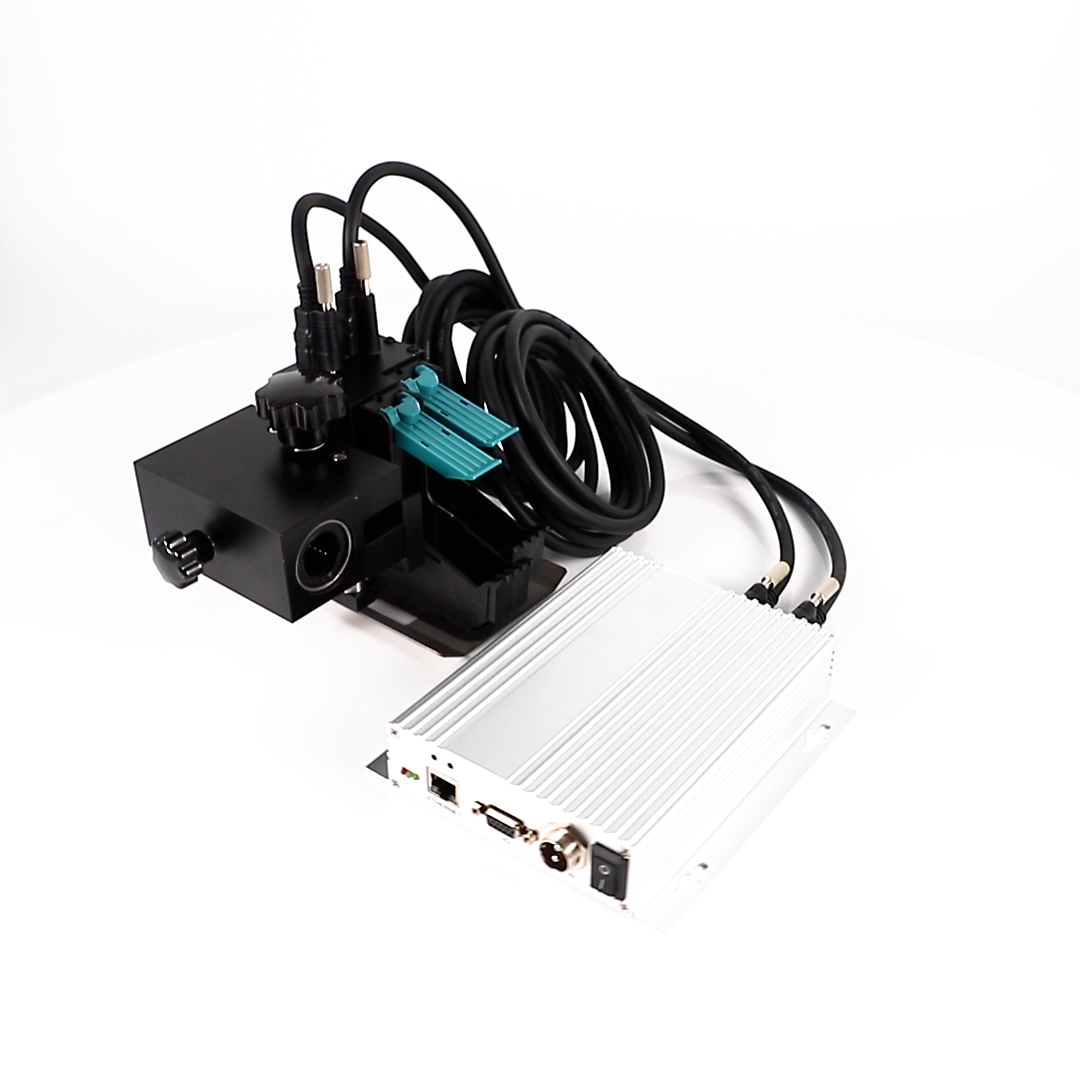
High-volume coding lines demand more than just speed—they need inkjet heads that refuse to choke under pressure. Chinese manufacturers have shifted from merely copying legacy designs to engineering thermal and piezo printheads with rebuilt fluid paths and nozzle geometries. These heads sustain clean, sharp character formation at line rates exceeding 300 meters per minute, even with heavily pigmented or fast-drying inks that would clog lesser hardware.
What sets the latest generation apart is not raw frequency alone but how the head manages heat and ink recirculation during nonstop shifts. Several domestic suppliers now embed real-time viscosity sensing and per-nozzle voltage trimming, so drop placement stays consistent from the first carton to the millionth. This means batch codes, expiry dates, and 2D matrix marks remain scannable without manual recalibration mid-run.
Maintenance tolerance has also changed the conversation. Replaceable orifice plates and self-sealing ink ports let operators swap a head in under five minutes without breaking line rhythm. Instead of treating the printhead as a fragile consumable, high-volume plants now run Chinese inkjet heads across multiple production seasons, treating them as durable capital equipment that finally matches the cadence of modern packaging floors.
Dynamic Marking on Any Substrate: From Film to Metal
The challenge of leaving a permanent, legible mark shifts dramatically depending on the surface you're working with. A thin, flexible polymer film behaves nothing like a rigid stainless steel plate under the same marking head. Heat, reflectivity, surface energy, and even the way a material dissipates stress all influence whether a code turns out crisp or barely visible. That's why a one-size-fits-all approach to marking usually falls short in real production environments.
Modern systems get around this by adjusting parameters on the fly—pulse width, focal distance, and power density for lasers, or impact force and stylus geometry for dot peen machines. On clear films, you might use a low-energy UV mark that cures without burning through. On anodized aluminum, a fiber laser can create a high-contrast white mark by disrupting the oxide layer. On bare steel, you need enough peak power to anneal the surface without causing warping. The key is knowing how each substrate responds before you even strike the first mark.
Some setups even combine technologies—using a vision system to detect the material type and automatically switch marking recipes. This matters for manufacturers who handle mixed batches or produce parts with multiple surface treatments. Instead of slowing down to reconfigure settings, the line keeps moving while the marking adapts. That level of flexibility is what turns marking from a fixed process into a true production asset.
Zero Downtime Goals: How These Printers Handle Continuous Runs
True zero downtime in a printing environment does not mean eliminating maintenance altogether—it means shifting that maintenance away from the middle of a job. Many conventional printers force a pause when toner runs low or when a printhead needs cleaning. Machines built for continuous runs are designed around a different assumption: that every stop for a consumable change or a cooling cycle is a loss, and those losses need to be designed out of the system rather than tolerated.
The hardware side handles this by making the most frequent service tasks non-disruptive. High-capacity ink or toner reservoirs can be replaced while the printer is still running, using a dual-tank design that keeps one supply active while the other is swapped. Paper input modules are similarly built with roll-fed or drawer-based options that allow refills without stopping the engine. Some models also use redundant printheads or self-cleaning nozzle arrays that perform quick maintenance bursts between pages instead of requiring a full stoppage.
On the software side, the goal is to anticipate issues before they force an intervention. Sensors track wear on rollers, fuser temperature, and ink viscosity, feeding that data into predictive algorithms. Operators get early warnings that a component is nearing its service interval, allowing them to schedule a brief replacement during a natural lull between jobs. Remote diagnostics can also resolve many firmware or calibration problems without a technician stepping onto the floor. The result is not a printer that never needs attention, but one that takes attention on its own terms—outside the continuous run.
Precision Without Pauses: The Mechanics of High-Speed Inkjet
At full traverse speed, a modern inkjet head fires tens of thousands of droplets per second, yet the real challenge isn't volume—it's timing. Each nozzle receives a shaped voltage pulse that squeezes a piezoelectric chamber, but tiny differences in ink viscosity, air bubbles, or nozzle wear shift droplet velocity by a few meters per second. To hold placement accuracy within a fraction of a pixel, the print engine reads linear encoder marks on the fly and adjusts firing delays in microseconds, not milliseconds. This is not a pause-and-check routine; it's continuous correction layered over a moving carriage.
The ink delivery system matters just as much as the electronics. A high-speed printhead can empty a small reservoir in seconds, so the supply path uses degassed ink, active pressure control, and recirculating channels to keep the meniscus stable at every nozzle. When the carriage reverses direction, acceleration forces try to pull ink away from the orifice plate. Without a tightly regulated vacuum and dampers close to the head, the first few drops after a direction change land late or miss entirely. Precision comes from keeping the fluid quiet even while the mechanics are loud.
Waveform tuning is where the machine learns its own quirks. A single pulse shape may work at 600 dpi but smear at 1200 dpi if the drop volume doesn't match the substrate's absorption rate. Engineers often overlay a small cancellation pulse after the main firing pulse to pull back the ink tail, preventing satellite droplets that drift and dot placement errors. The result looks effortless—sharp edges, clean gradients—but underneath it is a tightly coupled loop of pressure, voltage, motion, and feedback that never stops to realign.
Serialization at Scale: A Look Inside Chinese Printer Capabilities
Chinese printer manufacturers have quietly pushed serialization beyond simple numbering. High-volume production lines in Shenzhen and Zhuhai integrate variable data modules directly into printer firmware, allowing batch-specific codes, QR matrices, and microtext to be rendered on the fly without slowing print speed. This matters for packaging lines where every carton must carry a distinct serial tied to a database record.
The hardware side is equally telling. Many domestically produced print engines now reserve dedicated raster memory for serialized fields, separate from static page content. That split prevents RIP reprocessing of entire pages when only a counter changes, which is why some mid-range models sustain 60 pages per minute even with full-page variable data. Thermal and piezo inkjet heads from local suppliers include nozzle redundancy checks that reduce dropouts in barcodes, a failure mode that older designs often overlooked.
Beyond commercial print, government and logistics sectors drive much of this development. Traceability mandates for pharmaceuticals and auto parts require printers that can embed encrypted serials in invisible ink or micro-perforations. Chinese vendors have responded with closed-loop systems where the printer communicates directly with inspection cameras and rejection gates, treating each printed code as a verifiable event rather than an afterthought. The result is a class of machines optimized less for pretty graphics and more for absolute fidelity of every serialized mark.
FAQ
Standard coders usually print the same message repeatedly. Variable data systems pull content from a database or sensor in real time, so every carton, label, or cable can receive a unique code without slowing the line.
Yes, many are engineered for continuous operation at 200 meters per minute or more. They use drop-on-demand printheads with fast drying inks, plus dedicated controllers to keep code placement accurate at speed.
Food and beverage, pharmaceuticals, electronics, cable and pipe extrusion, and cosmetics. Any operation that needs batch numbers, expiry dates, QR codes, or serialized data on moving products can benefit.
They rely on optimized waveform control, nozzle health monitoring, and automatic speed matching. Some systems adjust droplet size and flight timing based on encoder feedback, so codes stay sharp even if line speed fluctuates.
You can often choose from solvent, UV, water-based, or pigmented inks. That covers porous cardboard, flexible films, glass, metal, and cable jackets. The key is matching ink chemistry to the surface and production environment.
Usually. Spare parts and consumables tend to be more affordable than European or US equivalents, and many suppliers offer modular designs that reduce downtime. Long-term service contracts can also be customized without mandatory annual packages.
Confirm communication protocols (Ethernet, RS232, PLC signals), printhead mounting clearance, and whether the software supports real-time data from MES or ERP. Also ask for a trial on your actual substrate and line speed.
It matters a lot. Look for suppliers with local service partners, remote diagnostics, and readily available nozzle and ink stock. A well-supported machine can match the reliability of premium brands, while a cheap unit without support can become a bottleneck.
Conclusion
Chinese variable data inkjet printers have moved far beyond simple batch codes, now delivering true serialization and dynamic marking at the full speed of modern production lines. These systems are built around inkjet heads engineered in China that maintain clean, consistent output even during high-volume coding runs that never pause for adjustments. Whether the substrate is flexible film, porous carton, or bare metal, the ink delivery and drop control adapt quickly, letting a single machine handle multiple packaging formats without swapping hardware. The mechanical design focuses on continuous operation: automated nozzle cleaning, real-time viscosity monitoring, and self-recovering print queues all work to eliminate downtime that would otherwise break a shift. Operators can push millions of unique codes through a line and see legible, scannable results hour after hour.
Behind this reliability is a precision inkjet architecture that synchronizes drop ejection with line encoders and product sensors, firing at microsecond intervals so that each code lands exactly where intended even as the belt accelerates or vibrates. Chinese manufacturers have also integrated serialization at scale, handling complex data sets such as GS1 barcodes, QR matrices, and randomized alphanumeric sequences without slowing the print engine. The result is a class of printers that turns variable data from a bottleneck into a background process. For factories running continuous high-speed lines, these machines offer a practical way to meet traceability requirements, anti-counterfeiting goals, and retail compliance without sacrificing throughput. The focus is not on marketing claims but on observable performance: fewer rejects, longer uninterrupted runs, and ink usage that stays predictable across weeks of nonstop operation.
Contact Us
Contact Person: Jacky
Email: [email protected]
Tel/WhatsApp: 086 15000607053
Website: https://www.danmajet.com