

Bulk Metal Tags for Industrial Labeling and Asset Tracking
2026-10-17
In a warehouse, a faded plastic tag can mean hours of lost time and a forklift chasing the wrong asset. For industrial labeling and asset tracking, metal tags aren't a luxury—they're the only option that survives grease, solvents, UV exposure, and the occasional collision. Yet sourcing them in bulk often means choosing between flimsy aluminum that bends or overpriced custom orders that arrive late. That’s where Kingming changes the equation. Their bulk metal tags are built for high-volume environments, with deep-stamped markings that stay legible after years of abuse. In this post, we'll break down what to look for in industrial metal tags, how to match materials to your tracking system, and why buying direct from a manufacturer like Kingming can cut costs without cutting corners.
Metal Tags Keep Working When Labels Peel Away
In facilities where equipment faces heat, moisture, or abrasion, adhesive labels rarely last long. Corners lift, ink fades, and within weeks the identifying information is gone. Metal tags are different. They are stamped, etched, or embossed, so the marking is part of the material itself. There is no surface layer to peel, smear, or wash away.
That difference matters most during audits, safety inspections, or routine maintenance. A metal tag remains legible after years of exposure to oil, solvents, or outdoor weather. When a label fails, the cost isn't just replacing the sticker; it's the time spent tracing an unmarked valve or cable. Metal tags eliminate that guesswork by staying readable for the life of the asset.
Alloy Selection for Corrosive and High-Heat Areas
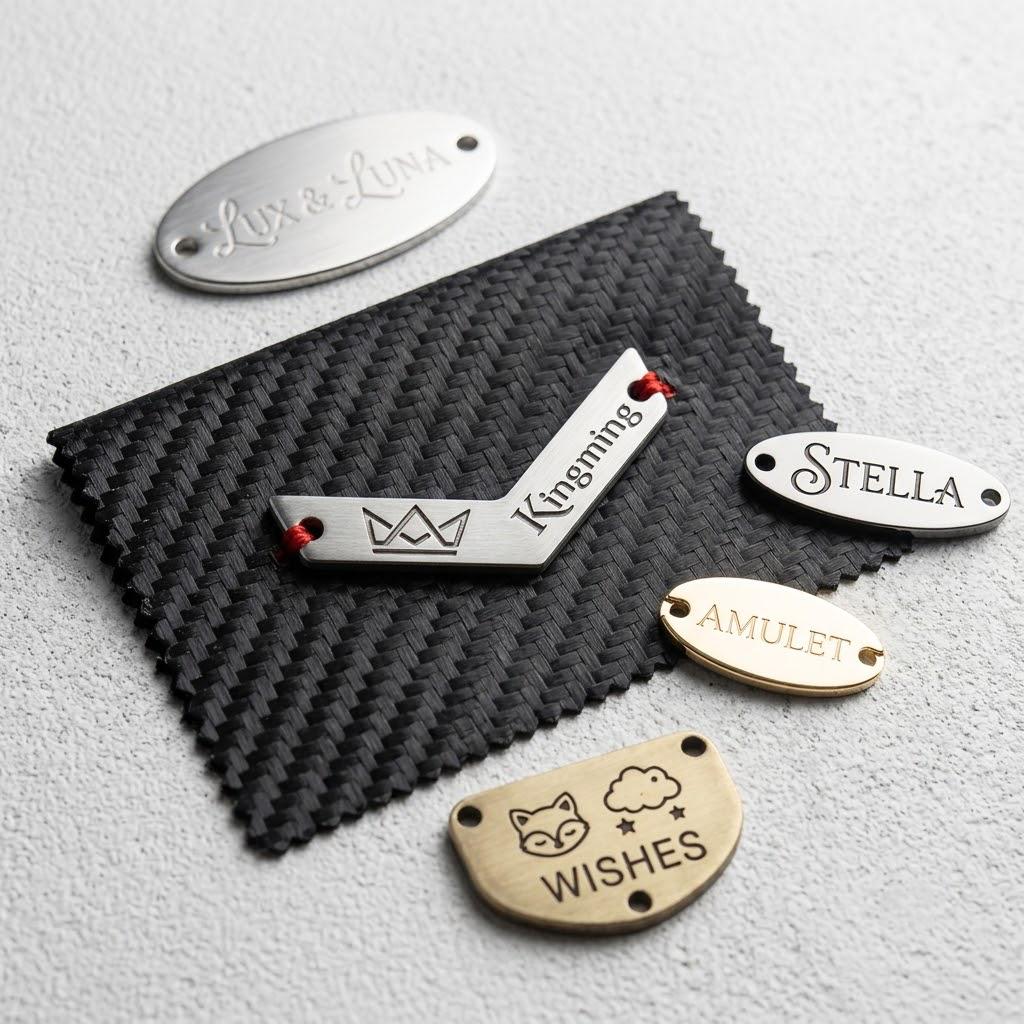
Selecting alloys for environments that combine corrosion with elevated temperatures is rarely a straightforward task. The usual stainless steels that handle mild acids or ambient salt spray often lose strength or scaling resistance once the temperature climbs. Engineers have to weigh oxidation behavior, thermal cycling tolerance, and the specific chemical attack mechanisms before settling on a material.
High-nickel alloys and certain super-austenitic grades offer a useful middle ground. Their chromium and molybdenum content builds a stable passive film, while nickel helps maintain metallurgical stability and resistance to chloride stress corrosion cracking. For more aggressive conditions, such as hot sulfuric acid or flue gas desulfurization units, higher alloyed nickel-chromium-molybdenum materials are often the only practical option. It's not just about picking the highest alloy content, though; fabrication, cost, and availability can rule out otherwise excellent candidates.
One often overlooked factor is the role of minor elements like titanium, niobium, or nitrogen. These additions can refine grain structure or stabilize carbides, preventing sensitization during welding or long-term exposure. Testing under realistic cyclic conditions—not just continuous immersion—is essential, because many failures in these areas stem from thermal fatigue combined with corrosion, rather than corrosion alone.
Embossed Serial Numbers That Survive Abrasion
Many stamped markings fade after repeated contact, but embossed serial numbers can hold up remarkably well when the impression depth and material deformation are controlled properly. The raised characters aren't just printed on the surface; they become part of the metal's structure through cold forming, which changes how the substrate responds to wear over time.
Instead of relying on ink or chemical etching, embossing forces the surrounding material outward, creating a positive relief that withstands scuffing, sanding, and even moderate grinding. The key is using a die with sufficient hardness and applying consistent pressure so the raised digits extend far enough below the original surface plane. Once the surrounding area is abraded down, the characters remain legible because their tops are still higher than the recessed background.
This approach works best on ductile metals like aluminum alloys, stainless steel, and certain brass grades, where the cold-worked zone retains its shape under stress. Industries such as heavy equipment manufacturing, firearm production, and aircraft maintenance favor these markings for components exposed to dirt, vibration, and frequent cleaning. Even when the surface finish is partially worn away, the serial number can often be recovered by oblique lighting or a simple pencil rubbing.
Attachment Hardware for Uneven and Moving Surfaces
Mounting anything to a surface that shifts or isn't flat calls for hardware that can flex without losing its grip. Standard bolts and fixed brackets fail quickly here. Instead, look for clamps with swiveling jaws, spring-loaded contact pads, and articulating arms that let you adjust the angle after the initial mount. A good example is a vacuum suction base paired with a ball-and-socket joint; the suction handles slight curves and roughness while the joint compensates for ongoing movement.
The real trick is distributing pressure across the contact area so a small bump or sudden jolt doesn't turn into a stress point. Rubber-faced pads, segmented clamp plates, and tension-adjustable straps all help. For moving platforms like boat rails or vehicle racks, quick-release cam levers and ratcheting straps give you the ability to tighten or reposition without reaching for separate tools. Avoid hard plastic-to-metal contact, since that tends to slip when vibration hits.
If the surface itself is uneven, consider hardware with independent leveling feet or multi-point contact. Mounts with two or three adjustable feet can bridge dips and ridges far better than a single flat base. Add a shock-absorbing washer or a flexible intermediate layer, and the setup will tolerate small shifts without loosening over time. In short, aim for something that holds through friction plus mechanical interlock, not just pure clamping force.
Designing a Tagging Workflow for Permanent Traceability
A tagging workflow that supports permanent traceability has to start with the question of what actually needs to survive over time. Instead of treating tags as a labeling afterthought, the design should lock the identifier to the physical or digital object at the earliest possible stage. That means choosing materials, print methods, or embedded codes that can withstand the environment the item will move through, and recording the link between tag and object in a system that does not silently rewrite history.
Once the initial assignment is made, the workflow should force every subsequent touchpoint to reference that same immutable tag. Handoffs between production, storage, shipping, and field use often introduce duplicate or replacement labels, which is where traceability breaks down. A better approach is to define a single source of truth for tag issuance and make any re-tagging event a logged exception, not a routine edit. The tag itself may be simple, but the rules around minting, attaching, and verifying it need to be explicit.
Finally, permanent traceability depends on readability years after the tag is first applied. The workflow should therefore include periodic verification checks and a clear path for retiring damaged tags without losing the object's identity chain. By thinking of tagging as a lifecycle event rather than a one-time task, teams can avoid the common pattern where data is rich at launch but becomes unreliable as soon as labels fade or people work around the system.
Bulk Orders Without Losing Customization
Placing a large order often means accepting rigid, one-size-fits-all options, but it doesn’t have to. Our production process is built to handle volume while still letting you choose colors, materials, and even small design tweaks that match your brand or event. You get the per-unit savings of buying in bulk without seeing the same identical piece everywhere you turn.
We handle each bulk request as a series of individual decisions, not a single bland print run. That means you can mix sizes, swap embroidery placements, or adjust packaging inserts for different recipients within the same order. The result feels less like a warehouse batch and more like a collection someone actually put thought into.
From corporate gifts to team uniforms, the balance between scale and personal detail is what makes a bulk order memorable. Tell us what you need to customize, and we’ll figure out how to keep that flexibility intact without slowing down delivery or driving up costs.
FAQ
Adhesive labels tend to peel, fade, or get torn off in harsh conditions. Metal tags, on the other hand, can handle heat, chemicals, moisture, and abrasion without losing legibility. That durability means you're not constantly re-labeling the same equipment, which saves a surprising amount of time and money over the long run.
Stainless steel or anodized aluminum are both strong choices. Stainless steel resists corrosion and can take high heat, while anodized aluminum is lighter and still weather-resistant. The best pick really comes down to your specific exposure—salt spray, UV, temperature swings—and the weight your mounting surface can support.
Yes, most suppliers offer laser etching or photo anodizing that produces high-contrast barcodes, QR codes, and serial numbers. These marks don't rub off like ink, so scanners can read them reliably even after years of service. Just be sure to request a resolution test if your barcodes are very small.
Common methods include rivets, screws, adhesive backing, or wire ties, depending on whether you need permanent mounting or occasional removal. For heavy vibration or high heat, mechanical fasteners like stainless steel rivets tend to hold up better than adhesives.
Look for choices in size, thickness, hole placement, corner shape, finish, and marking method. For example, a rounded-corner tag with pre-punched holes is easier to handle and mount than a sharp-edged blank. You should also confirm whether the supplier can handle variable data like sequential numbering without slowing down the order.
Not really. Most can be wiped down with common industrial cleaners or a damp cloth. The main thing is to avoid abrasive scrubbers on anodized aluminum if you want to preserve the surface finish. For stainless steel, even aggressive cleaning usually leaves the tag readable.
It varies by material and marking process, but many suppliers consider 100 to 500 units as a starting point for custom bulk orders. If you need only a few dozen, it's worth asking because some shops will still take smaller runs, though the per-unit cost will be higher.
For long-term asset tracking, usually yes. Plastic labels can crack, fade, or detach, leading to lost inventory data and rework. Metal tags may cost more initially, but they often outlast the equipment they're attached to, so the total cost of ownership is often lower.
Conclusion
When adhesive labels start curling at the edges or fade into illegibility, metal tags remain legible year after year. In facilities where heat, chemical exposure, and constant abrasion are daily realities, the choice of substrate matters more than the printing method. Stainless steel and aluminum alloys hold up in corrosive environments, while embossed characters—not ink—survive wire brushes, pressure washing, and heavy contact. Fastening systems also need to match the surface: rivets, cables, or high-bond adhesives keep tags attached to uneven or vibrating equipment where standard mounting fails.
A tagging workflow built around permanence starts with identifying the assets that matter most and assigning serial numbers that stay readable through the asset's entire life. Bulk orders don't have to mean generic output. Working directly with a manufacturer allows for variable data, specific hole patterns, and material choices that fit each application, so a large purchase still reflects the unique needs of the operation. This balance between volume and customization is what turns a simple metal plate into a reliable part of an asset tracking system.
Contact Us
Contact Person: Jamie Zeng
Email: [email protected]
Tel/WhatsApp: +86 13728219269
Website: https://www.kmhardware.com