

Best Rolling Machine Company for Quality and Durability
2026-10-12
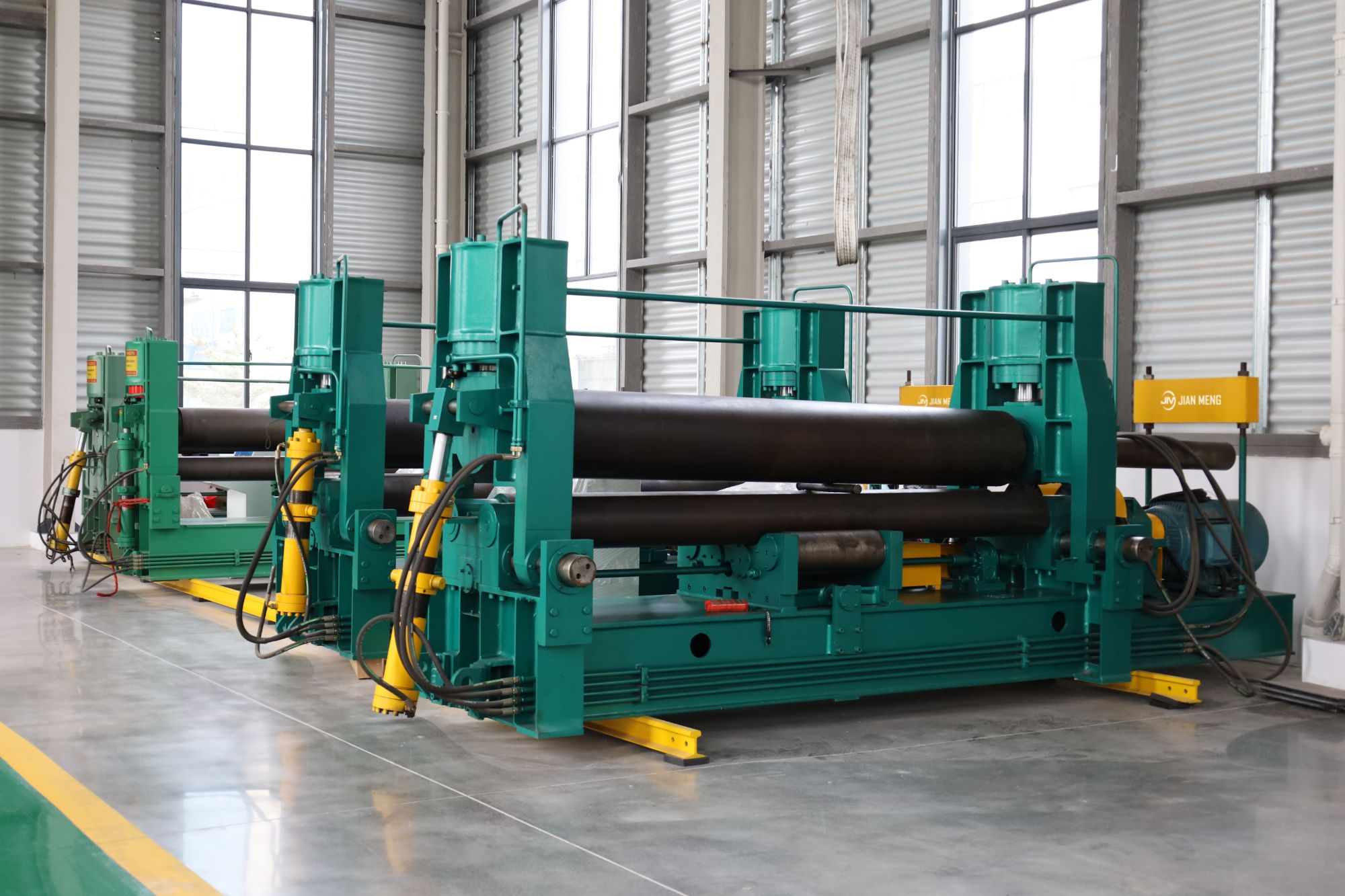
Most rolling machines look tough in a showroom. Put them through a real production week, though, and the differences in quality and durability start to show fast. JIAN MENG has earned its place among the best by focusing on what actually keeps a machine rolling year after year: frame strength, precision-ground rollers, and a drivetrain that doesn't flinch under load. If you're tired of replacing parts before the project pays for itself, this guide will show you what separates a workhorse from a gamble.
Why Some Rolling Machines Outlive Their Owners
A rolling machine that refuses to quit isn't built on luck. It starts with a frame cast from thick, vibration-absorbing iron rather than welded sheet metal, and a drive train where every gear is cut from hardened steel and dipped in an oil bath that never runs dry. Cheap machines wear out their bushings in a decade; the stubborn ones use tapered roller bearings on every load-bearing shaft, so a fifty-year-old machine still holds its tolerance while the original owner has long since retired.
The second secret is serviceability. Owners pass away, but their machines carry on because every wear point was designed to be reached with a standard wrench, not a proprietary tool that vanished with the factory. A bronze worm gear can be replaced in an afternoon, and the manufacturer still stocks parts for models sold before color television. That kind of parts continuity means a machine bought in 1972 is still earning its keep in a third-generation shop, its original paint worn smooth by hands that weren't born when it was bolted to the floor.
Finally, these machines outlive people because they were overbuilt for the job they were sold to do. A rolling machine rated for 16-gauge steel was actually engineered to handle 12-gauge day after day. The extra margin means normal wear never approaches the failure point, and the machine never works hard enough to shake itself apart. While cheaper imports end up as scrap after a few harsh winters, the overbuilt ones just keep humming along—quiet, steady, and indifferent to the generations that come and go around them.
The Hidden Costs of Skimping on Materials
When budgets tighten, material costs are often the first target. But choosing cheaper inputs rarely stays cheap. A lower-grade steel beam or thinner insulation may pass initial inspection, yet the real price shows up months later—warping, premature wear, energy loss, or even structural failures. These aren't just theoretical risks; they're the kind of problems that turn a small savings into a major unbudgeted expense.
There's also the labor angle. Skimping on materials frequently forces crews to spend extra time compensating for defects: recutting warped boards, mixing more adhesive to fill gaps, or redoing finishes that didn't bond properly. That labor cost eats into the supposed savings and often leads to rushed work, which creates its own set of defects.
And then there's the client's memory. A project that looks good for three months but shows cracks or fading by year one doesn't generate referrals—it generates complaints. The hidden cost isn't just the callback; it's the lost trust and the quiet disappearance of future business.
How We Build for the Worst-Case Scenario
When the power fails, the flood hits, or a key supplier disappears overnight, most plans fall apart because they were written for averages. We start from the opposite end: we assume the controls we rely on will fail at the same moment demand spikes. That means every critical path gets a second route that doesn't share a power source, a network, or a single point of human approval. The goal isn't to prevent every improbable event. It's to make sure no single event can cascade into a full shutdown.
We also rehearse in the dark, literally. Once a quarter, teams are asked to run a core process without their usual dashboards, bots, or automated alerts. They use paper, phone calls, and local logs. This surfaces hidden dependencies that look fine on architecture diagrams but break under stress. The exercises feel slow and clumsy, which is exactly the point: if you haven't practiced the slow path, you won't trust it when the fast path disappears.
Finally, we build recovery as a product feature, not an afterthought. Every service we ship has a declared "degraded mode" that is tested before launch, not after an incident. If a dependency times out, the system doesn't just retry indefinitely; it switches to cached data, queues writes, and tells the user exactly what is delayed. That honesty under pressure keeps small failures from becoming big ones.
What 10,000 Hours of Operation Looks Like
At the 10,000-hour mark, machines stop looking new in ways that a spec sheet can’t capture. Paint fades unevenly around access panels where hands have gripped again and again. Bolts develop a particular sheen from socket contact. Rubber seals show micro-cracks that only appear after years of thermal cycling. These details aren’t flaws; they’re a physical log of every shift, every adjustment, and every overlooked maintenance interval.
Operators who have crossed that threshold often describe the equipment as “settled.” Hydraulic systems respond with a predictability that only comes from thousands of load cycles. Electrical connections, if they were going to fail early, already have. What remains is a machine whose quirks are known and accounted for—where a slight delay in a valve or a particular vibration at idle is just part of its character. The real difference isn’t just age; it’s the accumulated familiarity between people and the equipment they’ve kept running.
Maintenance records tell the same story in ink and grease. At 10,000 hours, the service log is thick with entries: oil samples that trended upward before a bearing swap, a rebuilt pump at 7,200 hours, a wiring harness rerouted after one too many rubs against a frame rail. Each note represents a decision made under pressure. The machine isn’t simply old—it’s proven.
From Purchase to Payoff: The Durability Factor
A cheap item that needs replacing every year rarely ends up being a bargain. The moment you hand over cash for something built to last, you are not just buying an object; you are buying time. That is what the durability factor really means. It stretches the gap between purchase and payoff, letting each use quietly chip away at the original cost until the item has more than earned its place in your life.
Think about the tools in your kitchen or the boots you reach for every winter. The ones that hold up do not demand constant attention. They do not force you back into a store six months later with a broken zipper or a cracked handle. Instead, they fade into the background of daily routine, doing their job without drama. Over time, the money you did not spend on replacements becomes the real return on that first decision.
Durability also changes the math of ownership. A well-made jacket might cost more upfront, but divide that price by five hundred wears and the number looks almost trivial. A flimsy alternative might fall apart after a season. In the end, the most expensive thing you can own is something that fails before it has paid you back. The durable choice is not just about surviving; it is about making the gap between what you paid and what you got disappear completely.
Questions to Ask Before Choosing a Rolling Machine Supplier
Before you sign anything, dig into how the supplier handles machine customization and after-sales support. Ask if they can modify roller diameters, frame heights, or control systems to match your actual production floor, not just their catalog specs. Then push for references from shops that run similar material thickness and volume. A supplier who hesitates to share recent customer contacts or dodges questions about spare parts lead times is telling you something important about the next five years of ownership.
You also want to know who trains your operators and whether that training happens on your floor with your own material. Some builders send a technician for two days and call it done; others offer ongoing remote diagnostics and scheduled maintenance visits. Compare warranty terms line by line—structural frame coverage often differs wildly from electrical or hydraulic component coverage. If the sales rep cannot explain what happens when a roll bends out of tolerance fourteen months in, keep looking.
FAQ
Frame thickness, gearbox quality, and the brand's track record matter more than horsepower alone. A machine built with a heavy, welded frame and hardened rollers will resist flex and wear far longer than a lighter import.
Brands like Baileigh, JET, and Edwards have built reputations on thick frames and serviceable gearboxes. But individual models vary, so checking the plate thickness and roller hardness on the exact unit is essential.
The usual culprits are flimsy side plates, undersized drive shafts, and plastic bushings where metal should be. If you see a machine flexing under load or hear grinding at the roller ends, those are early warning signs.
Yes, if the frame is rigid and the rollers are crowned correctly. Machines with adjustable backlash and replaceable bronze wear strips tend to hold their tolerance much longer than fixed designs.
It is often the first component to wear out, so a hardened gear train with oil bath lubrication will outlast a cheap open gear set many times over. Look for metal gears, not nylon.
Pushing a machine near its maximum capacity every day shortens bearing and roller life considerably. Choose a model rated at least twenty percent above your thickest regular material for a comfortable margin.
Daily cleaning of metal chips, weekly greasing of all zerks, and monthly checks of roller parallelism make a bigger difference than the brand name. Rust prevention on bare rollers is equally critical.
Fully welded box-section frames and one-piece side plates are far stiffer than bolted-together sheet metal frames. If you can see the machine move or hear creaking when rolling near capacity, the frame is not rigid enough.
The difference is almost always in the details: bearing type, shaft diameter, heat treatment of rollers, and quality control during assembly. Two machines can look the same on the outside but behave completely differently in a shop.
Conclusion
A rolling machine that still runs true after three decades doesn't happen by accident. Builders who earn that kind of loyalty assume their equipment will face abuse, neglect, and the occasional overloaded shift. Cheap frames crack, undersized bearings wear out, and the real cost shows up in downtime, replacement parts, and missed deliveries—those hidden expenses dwarf any upfront savings from skimping on materials. The companies that last engineer for the worst day on the shop floor, not the best. That means thicker plate, heat-treated rolls, and oversized gearboxes that don't flinch when someone feeds them a little too fast. That's the difference between a machine you replace and one you hand down.
Ten thousand hours of operation is a baseline, not a ceiling. Real durability reveals itself in the second decade, after the paint has faded and the labels have worn off. A supplier worth your money will walk you through material specs, testing procedures, and warranty terms without hesitation. Before you commit, ask how many of their machines are still running after 20 years, what happens when a roll needs replacement, and whether they stock parts for models discontinued a decade ago. The answers tell you whether you're buying a tool or a long-term partner. Quality and durability aren't vague promises; they're visible in the weight of the frame, the finish on the rolls, and the confidence in the warranty.
Contact Us
Contact Person: Jeanie
Email: [email protected]
Tel/WhatsApp: +86 19805122954
Website: https://www.jianmeng.com