

Best Moulded Case Circuit Breaker Factory Qualities to Look For Before You Buy
2026-09-24
Before you sign off on a moulded case circuit breaker supplier, check what actually separates a reliable factory from a costly mistake. Consistent testing, transparent material sourcing, and responsive engineering support matter more than a glossy brochure. SINGI builds around these fundamentals, and the rest of this article walks through the factory traits worth verifying before you buy.
Reading Between the Lines of Factory Certifications
Factory certifications often look impressive on paper, but their real value depends on who issued them and how thoroughly they were audited. A badge on a website or a framed document in a lobby might signal compliance, yet it can also mask inconsistent practices that only surface when you dig into the audit reports, corrective action timelines, and the actual scope of what was assessed. Pay attention to whether the certification covers the entire production process or just a narrow slice of it, and whether the auditing body has a reputation for rigor rather than rubber-stamping.
Another layer worth peeling back is the difference between a certification that a factory purchased versus one it earned through sustained effort. Some schemes allow facilities to achieve status with minimal disruption, while others require unannounced inspections, worker interviews, and transparent remediation of violations. The most meaningful credentials are those that force a factory to change its behavior, not just its paperwork. If a certificate doesn't list specific dates, audit frequencies, or the names of the auditors, treat it as a starting point for further questions rather than a settled fact.
Finally, consider what the certification doesn't say. A factory may hold environmental compliance certificates while quietly subcontracting to unlicensed workshops, or pass labor audits while relying on temporary contract workers who fall outside the official headcount. The gaps between a listed standard and the day-to-day reality often hide in the fine print of the certificate's scope, the validity period, and any exemptions that were quietly granted. Reading between the lines means verifying the claims with independent sources, cross-checking with past violations, and understanding that a piece of paper is only as good as the system that stands behind it.
Walking the Production Floor Without Leaving Your Desk
The old way of checking on production meant lacing up your boots, grabbing a notepad, and spending half the morning winding past conveyors, welding stations, and assembly cells. That daily walk had value, but it also took time and only gave you a snapshot of one moment. Now a mix of live camera feeds, machine sensors, and floor-level dashboards lets you tour the entire line from a single screen. You can zoom into a specific workstation, watch cycle times in real time, or replay the last hour to see where a bottleneck started—all without leaving your chair.
Instead of hearing about problems secondhand from a shift supervisor, you get the visual context yourself. A quick virtual lap might reveal a stack of unfinished parts piling up at one station, a machine sitting idle with a fault light blinking, or a team member struggling to keep pace with a new process. That kind of detail is easy to miss in a summary report but jumps out when you can pan across the floor and look at the same area from different camera angles.
This way of working doesn’t replace walking the floor entirely—it sharpens the times you do go out there. Rather than roaming every aisle to see if anything is off, you can head straight to the two or three spots that looked questionable on screen. The result is fewer interruptions, faster issue spotting, and a better feel for how the line actually behaves over the course of a shift.
When Your Breaker Specs Demand More Than a Catalog
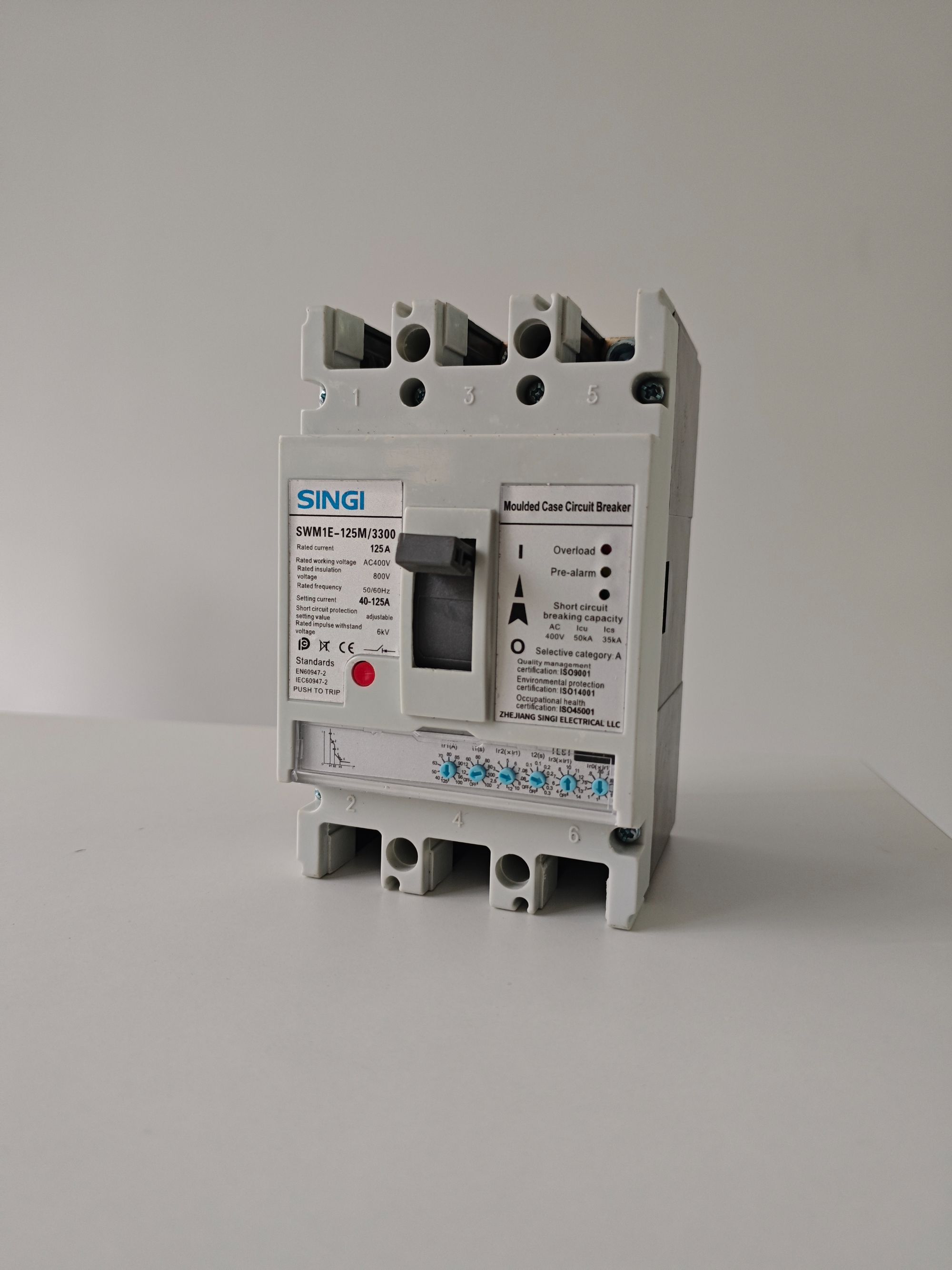
Standard catalogs cover the common stuff—frame sizes, trip curves, interrupting ratings. But it doesn't take long before a real project throws something at you that doesn't fit neatly into a table. Maybe you need a breaker with a specific auxiliary contact configuration, or the available fault current at your site is higher than what the off-the-shelf unit lists. That's when you realize a catalog page can't think through your application.
Custom ratings, unusual mounting requirements, or coordination with older switchgear often demand more than a quick pick from a PDF. For instance, a breaker might need to handle harmonic-rich loads without nuisance tripping, or fit into a panel where space is already spoken for. These are the moments when a conversation with an engineer beats a search through product sheets—because the right solution usually involves a modified standard rather than a completely bespoke design.
Looking beyond the catalog also means digging into actual test data, not just marketing numbers. A breaker that works fine in a climate-controlled lab might behave differently on a hot factory floor or at high altitude. If your specs push into those edge cases, you need a partner who can verify performance under your conditions, not just quote a part number.
The Testing Gauntlet That Filters Out Pretenders
Real skill doesn't announce itself; it survives. The testing gauntlet isn't a polite questionnaire or a casual review of past work. It's a deliberate sequence of escalating challenges designed to expose every shortcut, every borrowed idea, and every inflated claim. You can memorize talking points, but you can't bluff your way through a live problem that shifts under your feet. The gauntlet separates those who have merely studied the map from those who have actually walked the terrain.
What makes this filter so effective is its refusal to accept surface-level answers. A pretender can recite best practices, but ask them to debug a broken system at 3 a.m. with incomplete logs, and the cracks appear. The gauntlet doesn't care about your title, your portfolio's gloss, or how confidently you speak. It cares whether you can deliver under pressure, adapt when the rules change, and own your mistakes in real time. That's a standard no amount of resume polishing can fake.
Organizations that embrace this kind of rigorous screening end up with teams that trust each other's competence. You don't need to double-check every claim because the gauntlet already did that work. The pretenders self-select out, often before the final round, because the cost of pretending becomes too high. What remains is a group of people who have proven they can handle the unexpected — not in theory, but in the messy, unforgiving arena of real work.
Delivery Promises That Hold Up Under Pressure
When a customer hears “your package will arrive Thursday,” that’s not a casual guess—it’s a contract written in logistics. The best delivery promises aren’t built on best-case scenarios but on honest buffers, real-time inventory checks, and carrier histories that account for weather, holidays, and warehouse bottlenecks. If the system says 3 days, promising 2 because it sounds better is how you lose trust permanently.
Pressure reveals the quality of that promise. During peak season or unexpected demand spikes, weak delivery estimates fall apart exactly when customers are watching. A resilient promise means having alternate fulfillment routes, clear exception handling, and proactive communication when a delay looms. It’s not about never failing—it’s about failing with enough warning and a plan that still respects the buyer’s time.
Ultimately, a delivery promise that holds up under pressure is a competitive advantage money can’t quickly buy. It’s the quiet result of testing, measuring actual transit times versus quoted ones, and adjusting until the gap is negligible. Customers may not notice when everything works, but they definitely notice when it doesn’t—and they reward the brands whose promises don’t crack.
The After-Sale Help You'll Wish You Negotiated For
Most people spend hours comparing prices and specs but completely ignore the support that kicks in after the card is swiped. That's where the real headaches hide—firmware updates that break features, replacement parts that never arrive, or a support line that only answers between 2 and 3 a.m. Ask upfront what happens when something fails six months in. Get names, not departments. Get response-time promises in writing, not just a cheery 'we're here for you.'
Think beyond the standard warranty card. Negotiate for a dedicated support contact, a loaner unit while yours is being repaired, or free software updates for the life of the product—not just the first year. Many vendors will quietly agree to extended troubleshooting or discounted spare parts if you push before signing. The trick is to treat after-sale help as a line item, not an afterthought. If they won't commit to specifics, that silence tells you everything about the relationship you're about to enter.
And don't underestimate the value of a clear escalation path. When the first support rep reads from a script and gets stuck, who do you call next? Insist on knowing the name or role of someone who can actually authorize a return, a refund, or a site visit. One well-negotiated clause about after-sale escalation can save you weeks of frustration later. It's not about being difficult—it's about making sure the help you'll inevitably need is already built into the deal.
FAQ
Look beyond the usual ISO 9001. A solid factory will have product-specific certifications like IEC 60947-2, UL 489, or CCC depending on your market. Ask for copies of the actual test reports and check whether they cover the full range of current ratings you plan to order.
It matters a lot. A factory that has been producing MCCBs for a decade but only in low current ratings may struggle with 800A or 1000A frames. Ask about their most complex projects and whether they have manufactured breakers with adjustable trip settings, motor operators, or communication modules.
Request details on incoming material inspection, in-process testing, and final routine tests. A good factory will perform calibration checks on test equipment, do temperature rise tests on sample batches, and keep traceability records linking each breaker to its production date and operator.
Not every factory can. If you need non-standard thermal or magnetic settings, special terminals, or auxiliary contacts, ask for their engineering capability. A factory with an in-house tooling shop and a design team can usually modify molds and adjust bimetal strips without long delays.
Ask about warranty terms and how they handle field failures. Do they offer replacement units quickly? Is there a technical support line in your time zone? A factory that keeps spare parts for discontinued models or provides on-site training for your technicians is more likely to be a long-term partner.
Be wary if they cannot show raw material certificates for copper, silver contacts, or engineering plastics. Also watch for inconsistent labeling, lack of date codes, or reluctance to share internal failure rate data. If they only quote very low prices without explaining how they achieve them, that's a signal.
It depends on your project schedule. A factory with a smooth production line and buffer stock of common components can often ship standard breakers in two to three weeks. If you need custom configurations, confirm the lead time before placing the order and ask how they handle urgent orders.
Yes, especially for large orders. A visit lets you see the assembly line, test lab, and storage conditions. You can also meet the quality manager and ask about their defect rate. If a visit isn't possible, request a video tour and live demonstration of their routine test bench.
Conclusion
A factory's paperwork can look flawless until you start asking who actually signed off on the thermal-magnetic trip curves. Certifications matter, but the real signal is whether the manufacturer can walk you through their latest IEC or UL test reports without hesitation, explaining which third-party lab issued each certificate and what deviations were flagged. The same scrutiny applies to the production floor. Instead of settling for a glossy brochure, request a live video tour of the assembly line, calibration stations, and the area where they store completed breakers awaiting shipment. You want to see lot traceability labels, not just polished equipment. When your breaker specs drift beyond the standard catalog—say a non-standard rated current, unusual ambient temperature range, or a special trip curve—pay attention to how the factory responds. A quick 'yes' without engineering questions is often worse than a cautious 'we need to check our busbar spacing and arc chamber design.' The best factories know when a modification is feasible, and they prove it with calculation sheets rather than assumptions.
Testing separates genuine manufacturers from trading companies that slap their name on someone else's product. Ask about the specific gauntlet each series must pass: temperature rise at full load, endurance cycling at rated current, short-circuit breaking at the maximum kA rating, and dielectric withstand after fault interruption. The factory should be able to share raw test data or offer an invitation to witness a sample test, not just a PDF of a type-test certificate from a decade ago. Delivery promises are equally telling. A credible supplier will discuss current lead times for molded case breakers, explain which components are held in buffer stock, and admit when copper or silver contacts are on allocation. If every answer is 'no problem, we ship in fifteen days,' be wary. Finally, dig into after-sale support before signing anything. Get specifics on spare parts availability for the trip unit and arc chamber, typical response time for technical queries, and how warranty claims are handled when a breaker fails in the field. The factories worth buying from treat these questions as routine, not as annoyances.
Contact Us
Contact Person: Jack
Email: [email protected]
Tel/WhatsApp: (+86) 13757759651
Website: https://www.singi.com